Roadtrip along the Upper Middle Rhine Valley, Germany
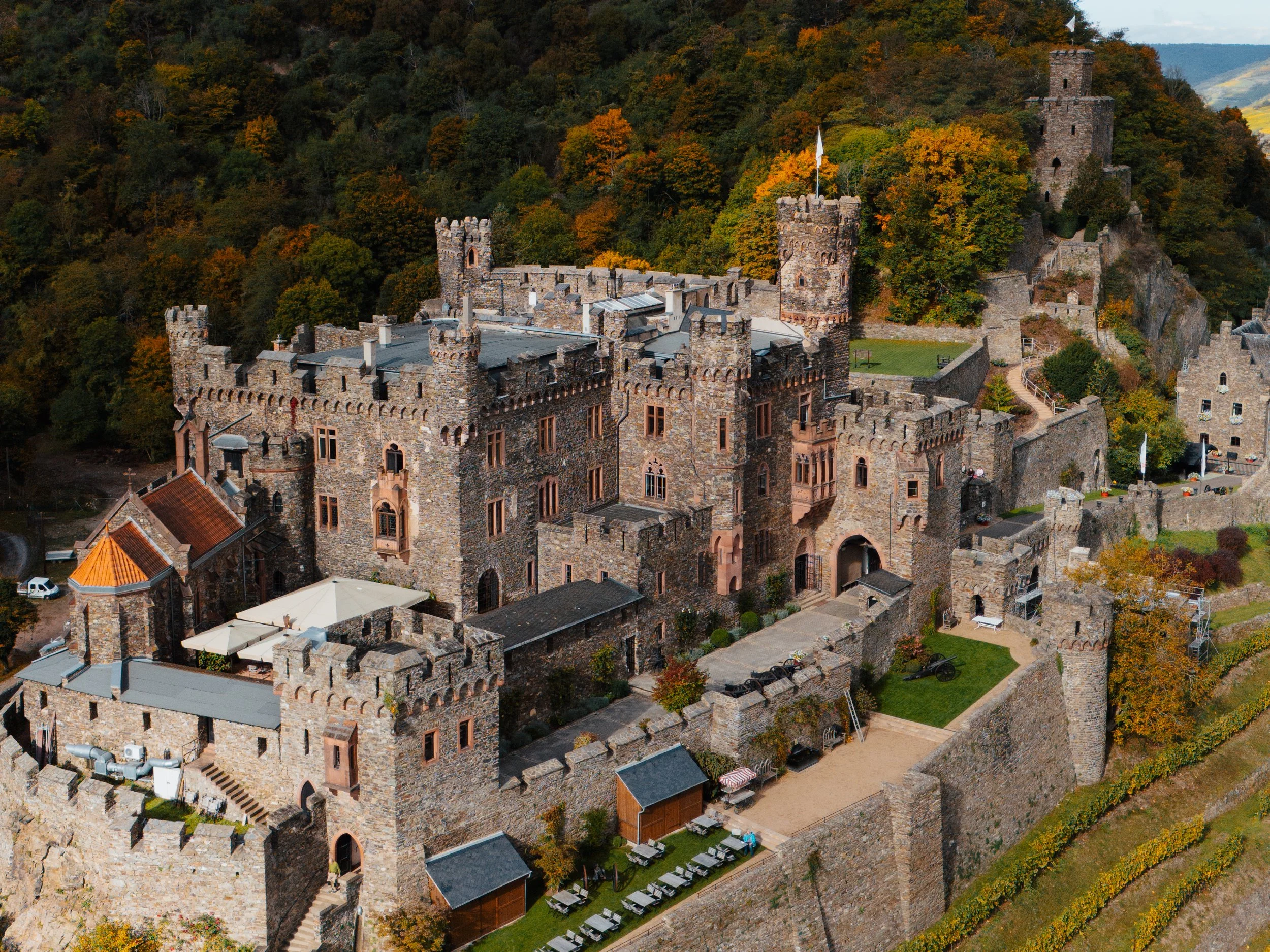
If there is one castle tour you must do in Germany, it’s this one!
Along the Rhine between Bingen and Koblenz, there are countless castles that can easily be visited over the course of a weekend on the Rhine. Due to the high concentration of castles located close together, the Rhine Valley has been a UNESCO World Heritage Site since 2002. And the best part: most of these castles are museums, restaurants or hotels and are therefore accessible to visitors.
Most of these castles were built in the 12th and 13th centuries. Over the centuries, the Rhine Valley saw many conflicts, and some castles were destroyed by robber barons just a few years after they were built. Many others fell victim to the War of the Palatine Succession, but well-preserved ruins can still be visited today.
Planning
Between Bingen and Koblenz there are no bridges, only a few ferries, so a trip to this region needs to be well planned.
My recommendation: start by working your way upriver on the left bank of the Rhine, then cross over to the right bank in Koblenz.
The left bank has the highest number of impressive castles, so it’s worth spending more time there. On the right bank, there are fewer castles that can be visited.
Accommodation
As mentioned, some of these castles have been converted into hotels. We stayed at Burg Rheinfels in St. Goar, which we can highly recommend.
Getting there
There are many ways to explore the castles.
If you prefer public transport, this works very well. The nearest ICE (high-speed train) stop is Koblenz, and there is a regional train line running along the Rhine on the left bank downstream. Local public transport is also very well developed.
Travelling by car offers the most flexibility (also weather-wise – after all, this is Germany…) and is the fastest option. There are plenty of parking spaces, many of them free of charge.
You can also explore the Rhine by bicycle. There is a well-developed cycling network that runs directly along the river on dedicated bike paths. For more information click here.
In addition, the Rheinsteig hiking trail runs along the right bank of the Rhine. It follows higher ground above the river and offers fantastic views of the castles. More information on the individual stages in the Upper Middle Rhine Valley can be found online – click here.
On the left bank, the RheinBurgenWeg runs alongside the castles, allowing you to visit many of them on foot. Click here for more information.
Of course, you could also choose a Rhine Cruise which will pass by all the castles mentioned below.
Ferries
There are ferries crossing the Rhine in Boppard, St. Goar and Kaub.
The Castles
Now to the most important part: the castles themselves. Going into detail on all of them would go beyond the scope of this post (yes, there really are that many!), so I will only mention the ones you absolutely should see. To make planning easier, I’ll go through them in order.
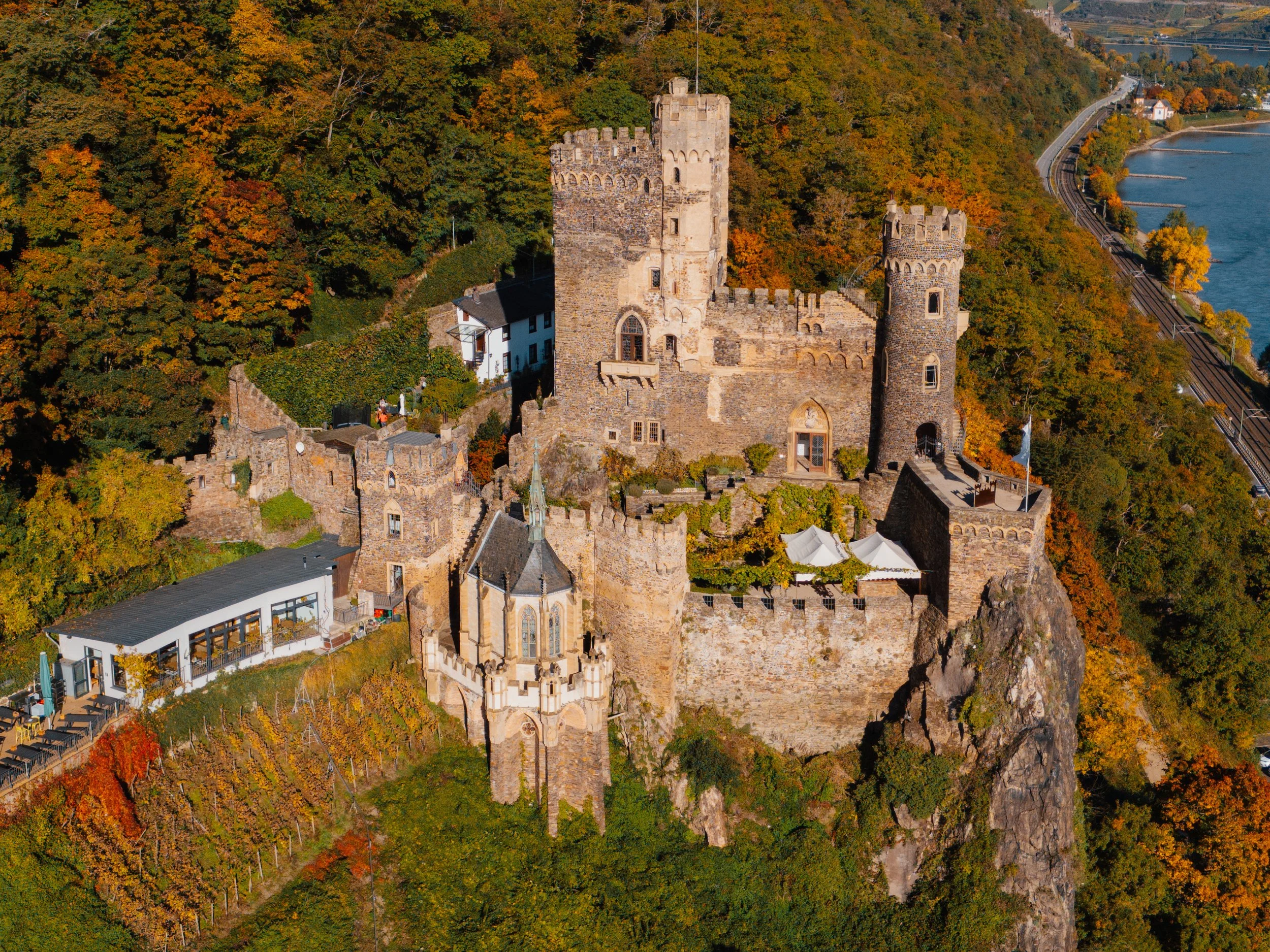
Burg Rheinstein
Built between 1306 and 1320 as a residential tower castle, Burg Rheinstein was rebuilt from 1825 onwards by a Prussian noble family as a summer residence. It was the first castle to be rebuilt during the Romantic reconstruction period, following the destruction of many Rhine castles during the Thirty Years’ War, the War of the Palatine Succession and the Napoleonic era.
Today, the castle houses a restaurant, apartments and a castle museum that provides insight into aristocratic living culture during the time of Prince Frederick of Prussia in the 19th century. His strong interest in and knowledge of the Middle Ages is clearly reflected throughout the castle.
Opening hours: daily from 15 March to 1 November; in winter only Saturdays and Sundays
Recommendation: a narrow path near the castle leads to a viewpoint behind the castle
Parking: available below the castle; access via a wide gravel path uphill
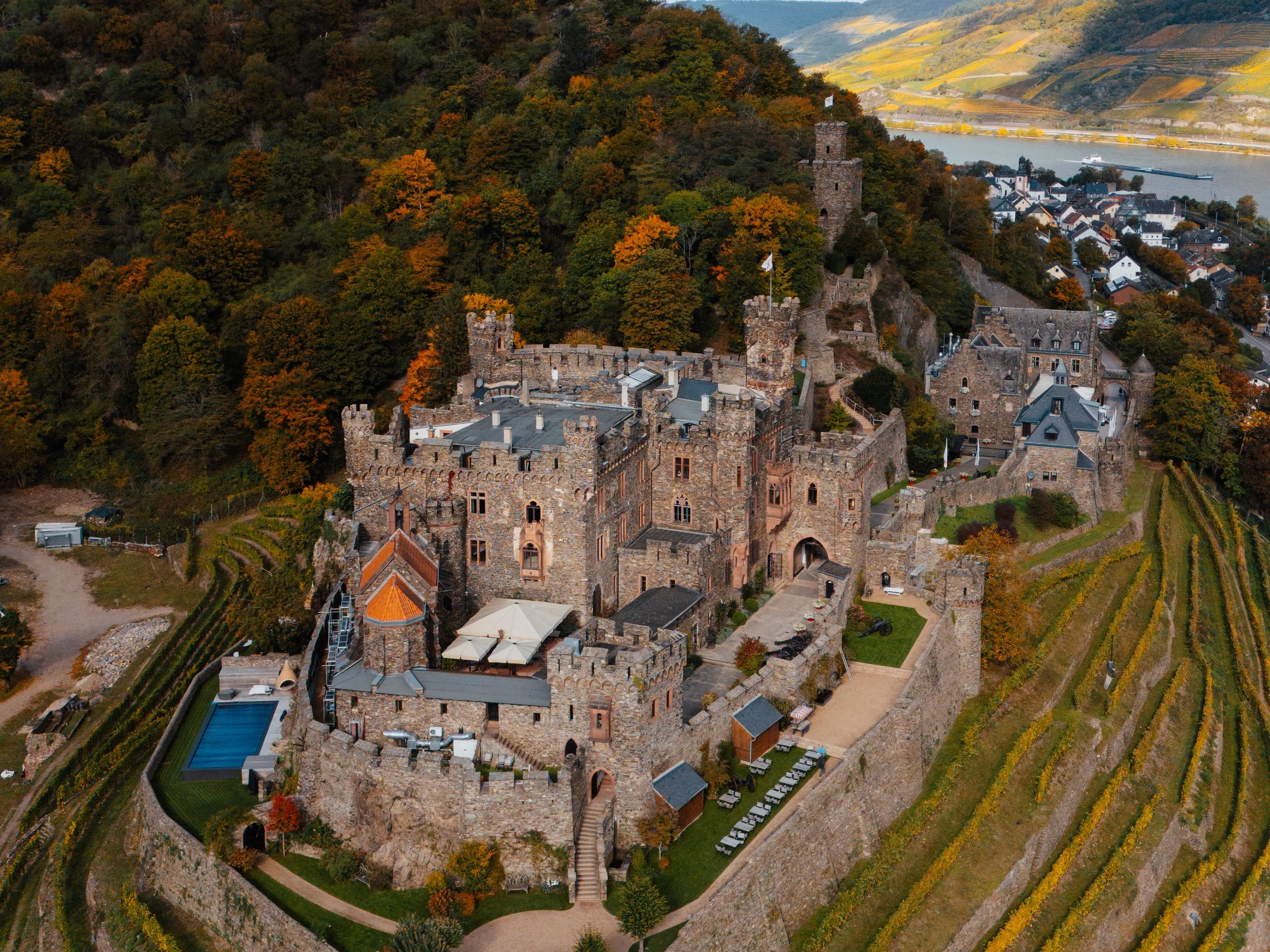
Burg Reichenstein
Dating back to the 13th century, Burg Reichenstein was rebuilt between 1899 and 1903. Today it houses a hotel, restaurant and castle museum showcasing late Romantic interior design. Like its neighbour Burg Sooneck, it has a history shaped by robber barons and conflicts.
Opening hours:
April–October: daily 9 am–6 pm
November–March: daily 9 am–5 pm
Last entry one hour before closing
Admission: €12 adults (14+), €6 children
Parking: next to the castle, almost level access
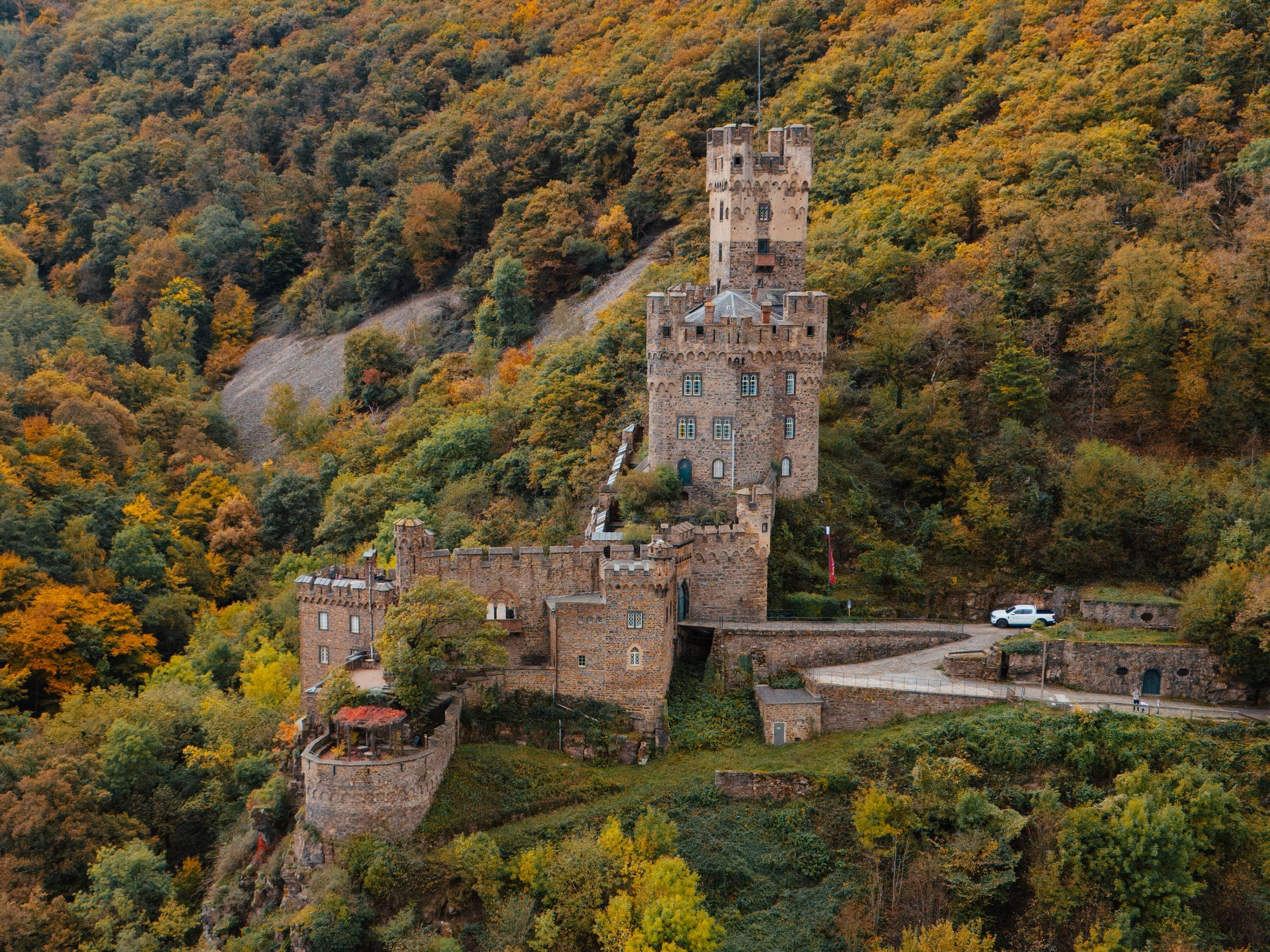
Burg Sooneck
Built in the 11th century, Burg Sooneck stood ruined for a long time due to destruction by robber barons. In 1842, King Frederick William IV of Prussia ordered its reconstruction as a royal hunting lodge. The restoration closely followed medieval models, preserving original elements such as the keep and main building.
The castle can only be visited as part of a guided tour.
Opening hours: April–November, daily 10 am–6 pm
Admission: €5.50 adults, €4 reduced
Parking: free parking approx. 300 m below the castle
Burg Pfalzgrafenstein
Built in 1327, Burg Pfalzgrafenstein stands on a rocky island in the Rhine, making its location truly unique. It once served as a watchtower and toll station and is now only accessible by ferry.
Opening hours:
15 March – 31 October: Thursday–Sunday & public holidays, 10 am–5 pm
November & 1 February – 14 March: Saturdays, Sundays & public holidays, 10 am–4 pm
Admission: €8 adults, €7 reduced, €4 children (family tickets available)
Parking: limited roadside parking along the Rhine
Burg Schönburg
Built in the 12th century, Burg Schönburg remained imperial property until its destruction. It was restored in the 20th century and now houses a restaurant, hotel and tower museum.
Burg Rheinfels
Built in 1245 as a customs castle, Burg Rheinfels quickly became one of the strongest fortresses on the Middle Rhine. After withstanding a year-long siege in 1256, it gained a reputation as being impregnable. Through strategic marriages and financial policies, its ruling family became one of the most powerful in the region.
Despite resisting the troops of Louis XIV, the fortress was handed over to the French Revolutionary Army in 1794 and blown up two years later. The extensive ruins can still be visited today.
Opening hours:
March–October: 10 am–6 pm
November–February: 10 am–3 pm
Admission: €6 adults, €4 reduced, €4.50 students, €3 children
Parking: directly at the castle
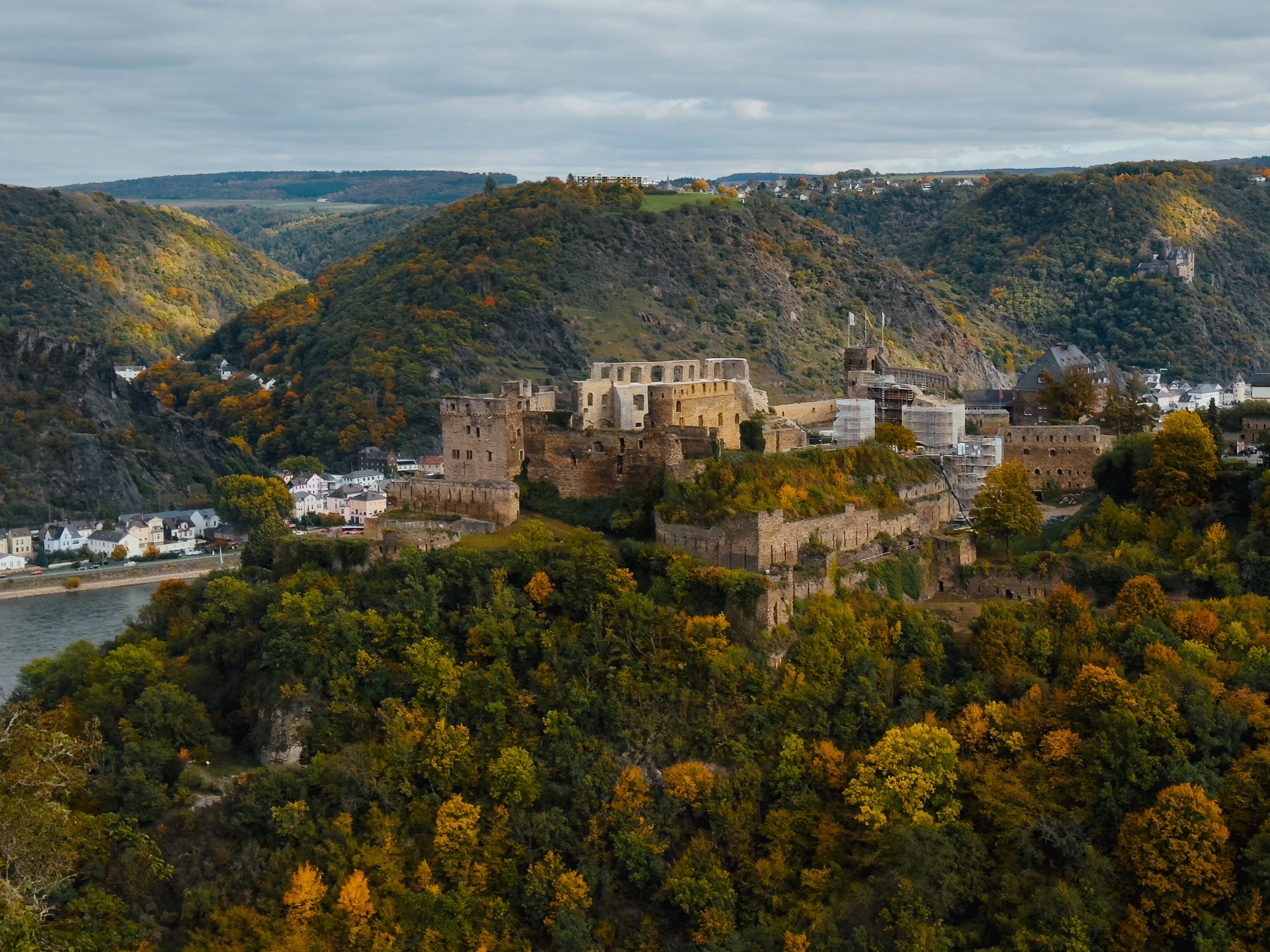

Schloss Stolzenfels
Built in 1248 by the Archbishop of Trier, Schloss Stolzenfels was destroyed during the War of the Palatine Succession and rebuilt from 1823 onwards by Crown Prince (later King) Frederick William IV of Prussia as a royal residence and summer retreat.
Opening hours:
15 March – 31 October: Thursday–Sunday & public holidays, 10 am–5 pm
Winter: limited weekends
Admission: €6 adults, €5 reduced, €3 children
Parking: paid parking below the castle
Fortress Ehrenbreitstein, Koblenz
The Fortress Ehrenbreitstein has a long history. Settlements existed here over 3,000 years ago, with the first castle built around the year 1000. The current fortress was constructed between 1817 and 1828 and used by the Prussian army until 1918.
Opening hours:
29 March – 1 November: daily 10 am–6 pm
3 November – 28 March: daily 11 am–4 pm
Admission: €10 adults, €9 reduced, €5.50 students, €4 children
Access: via fortress lift or cable car
Burg Lahneck
Built in 1226 by the Archbishop of Mainz, Burg Lahneck is another example of Rhine Romanticism. After destruction during the Thirty Years’ War and the War of the Palatine Succession, it was rebuilt in the 19th century in Neo-Gothic style.
Visits only possible with guided tours.
Marksburg
Marksburg is the only hilltop castle on the Rhine that has never been destroyed. Built in 1231, it served to protect nearby silver mines and can only be visited on guided tours.
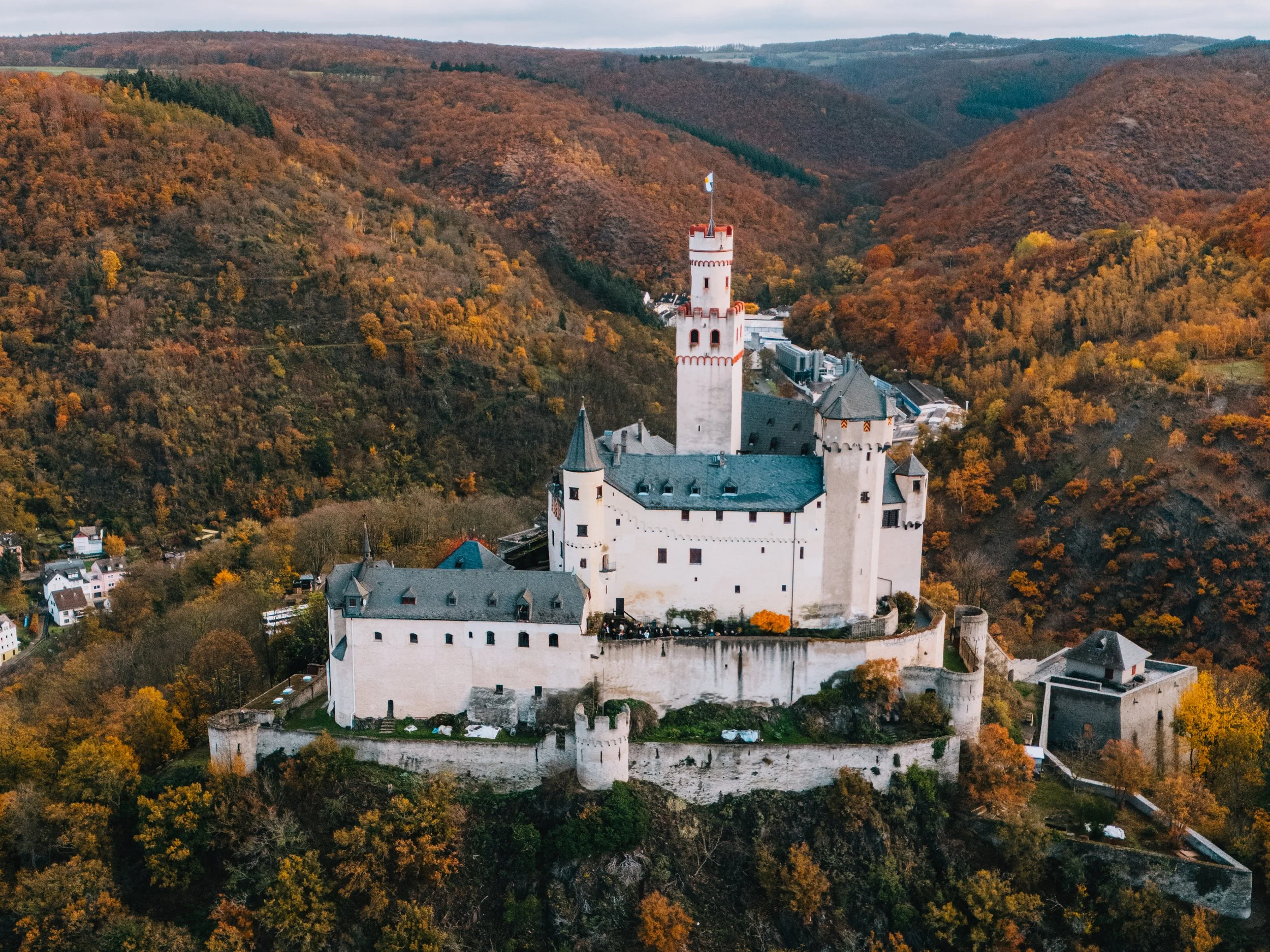
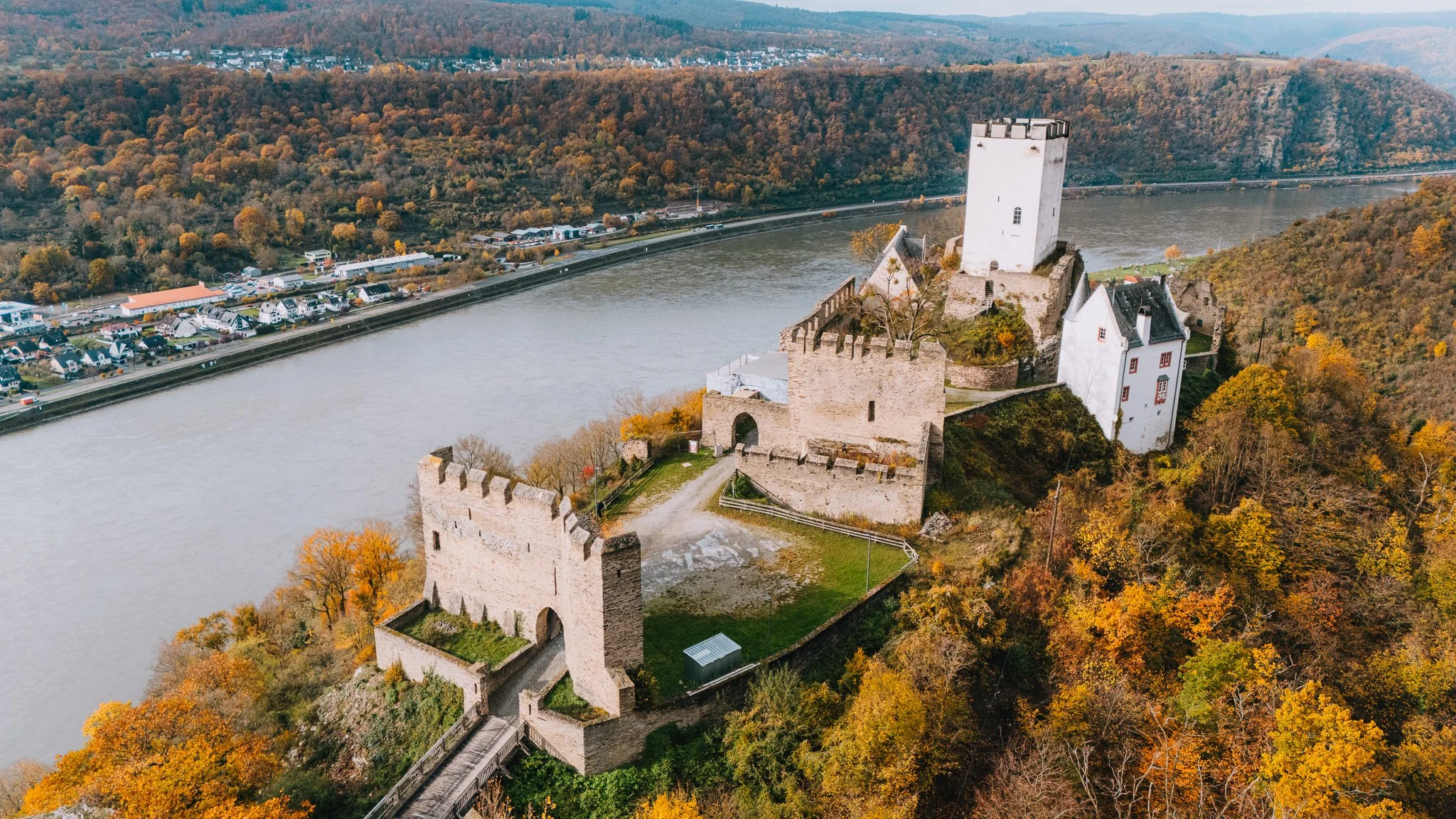
Burg Sterrenberg & Burg Liebenstein
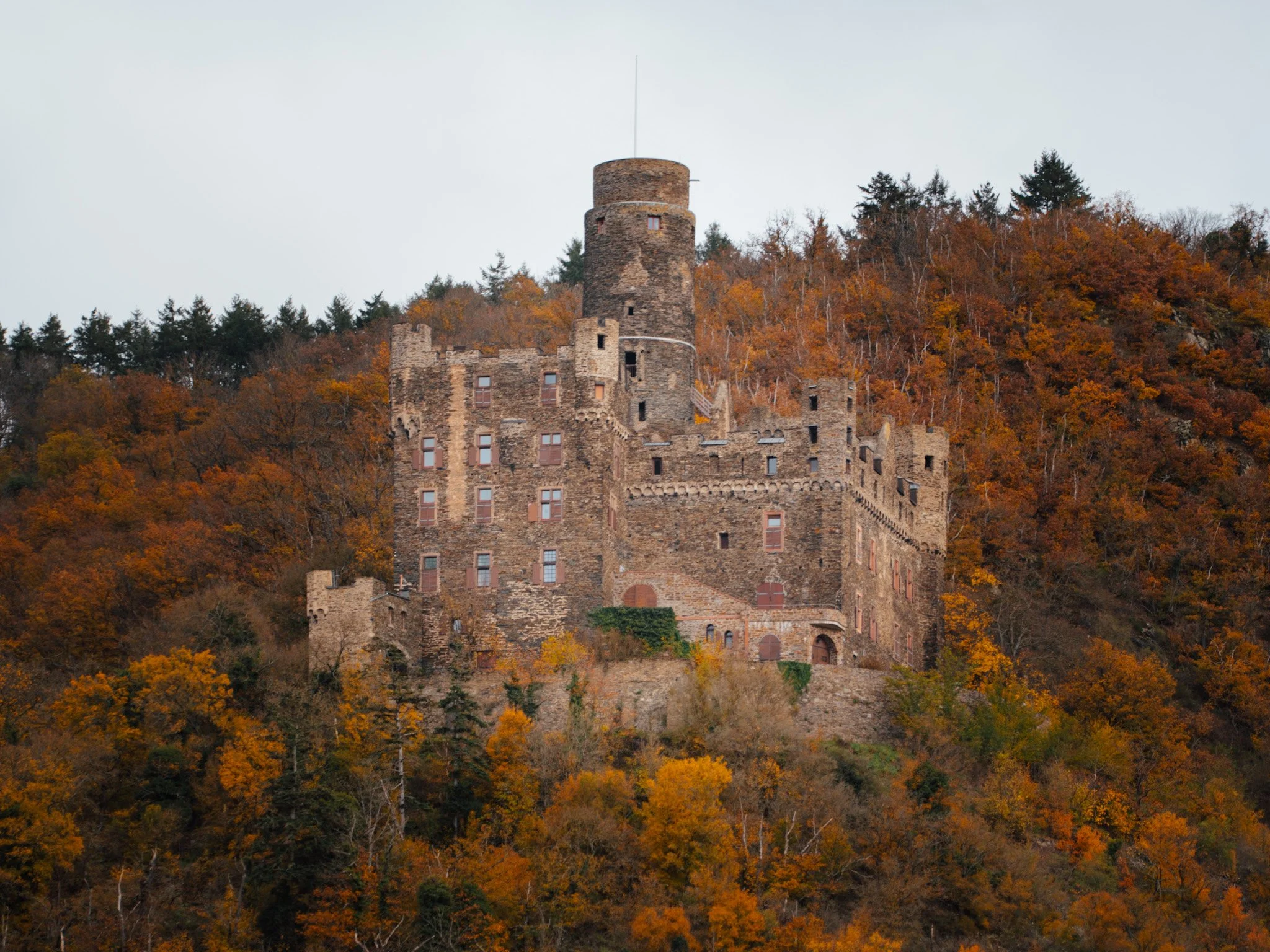
Known as the “Hostile Brothers”, these two castles were once connected but separated due to family disputes. Burg Sterrenberg houses a restaurant, while Burg Liebenstein also features a hotel.
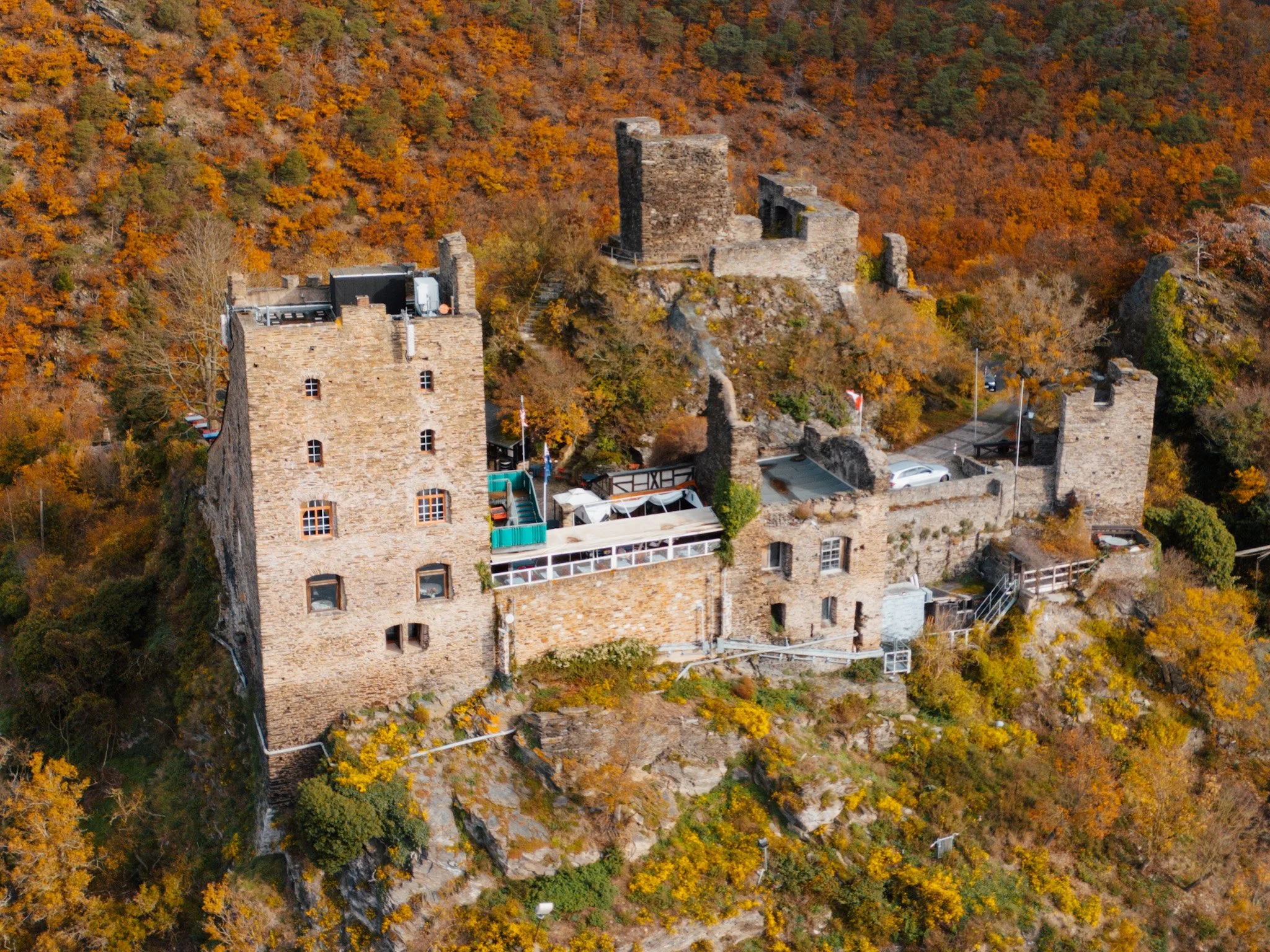
Burg Maus & Burg Katz
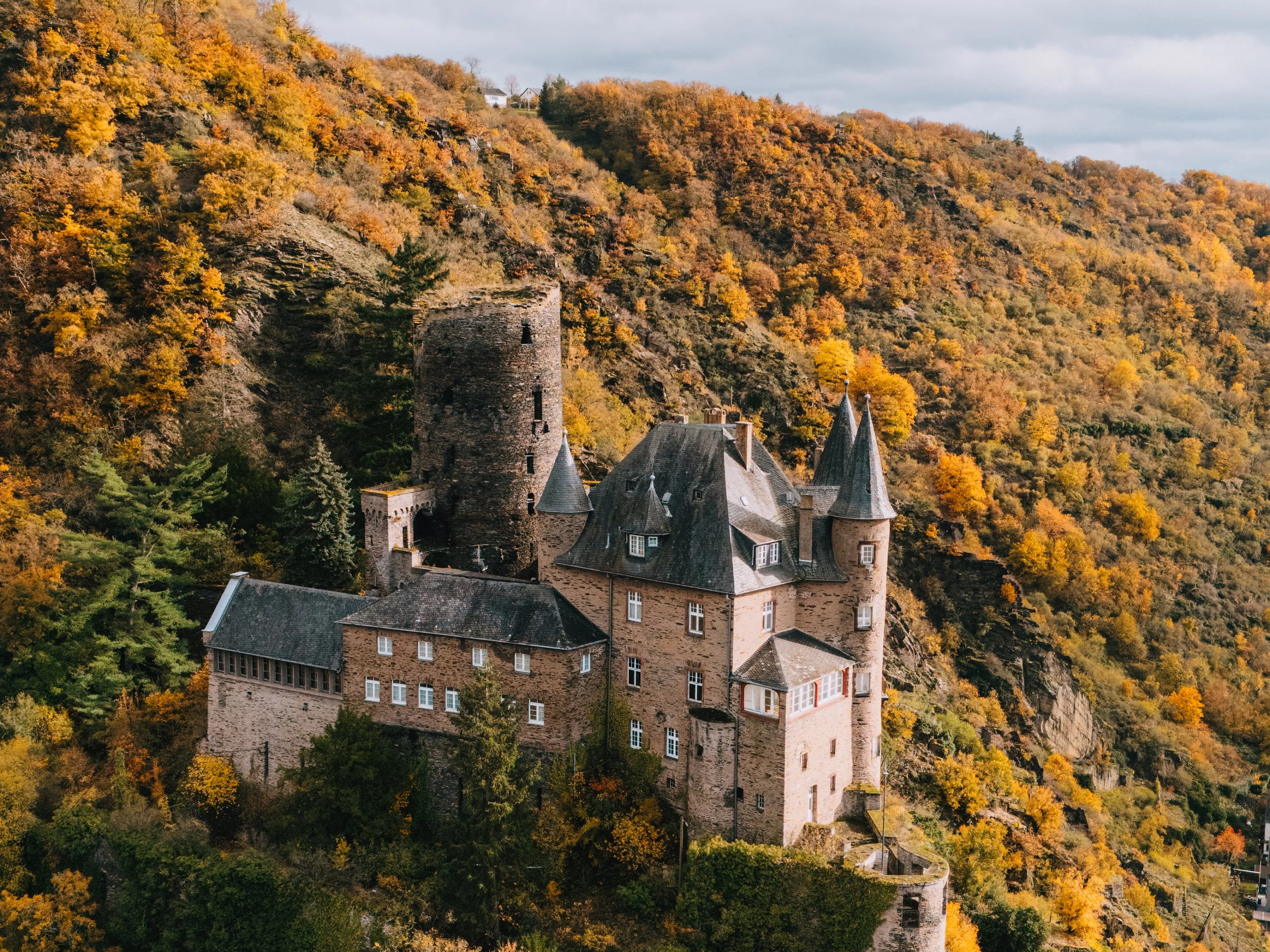
Named after the rivalry of their former owners, Burg Maus and Burg Katz were built in the 14th century as opposing fortresses. Burg Maus was rebuilt in 1900; both castles are privately owned and not open to the public.
Burg Gutenfels
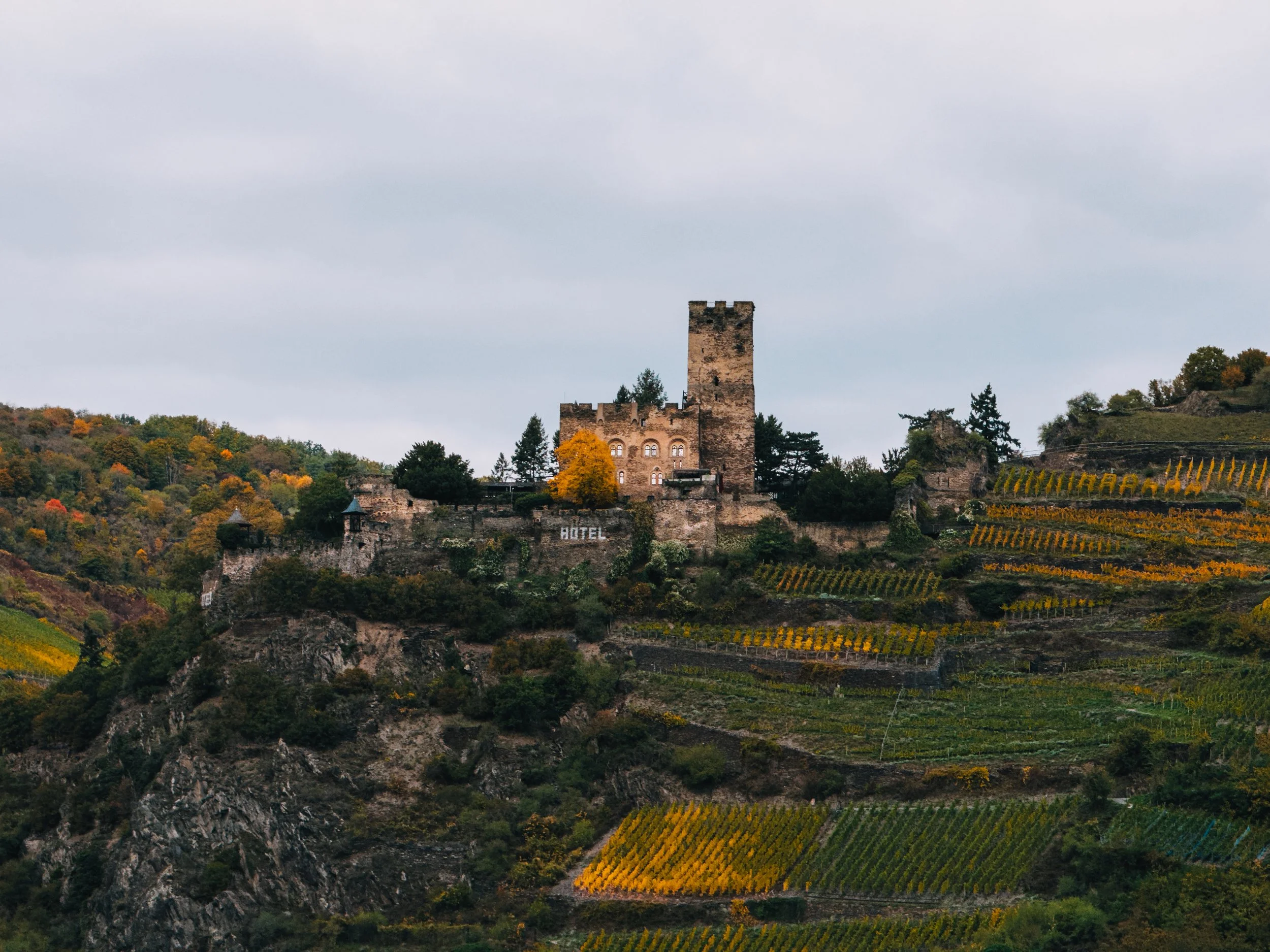
Built in 1222, Burg Gutenfels once worked together with Burg Pfalzgrafenstein as a toll station. Since 2022, it has once again operated as a castle hotel.
Ehrenfels Castle Ruins
Dating back to 983, Ehrenfels gained importance during medieval imperial conflicts. It was destroyed in 1688 during the French occupation.
Opening hours: closed
Places worth seeing along the route
Bacharach
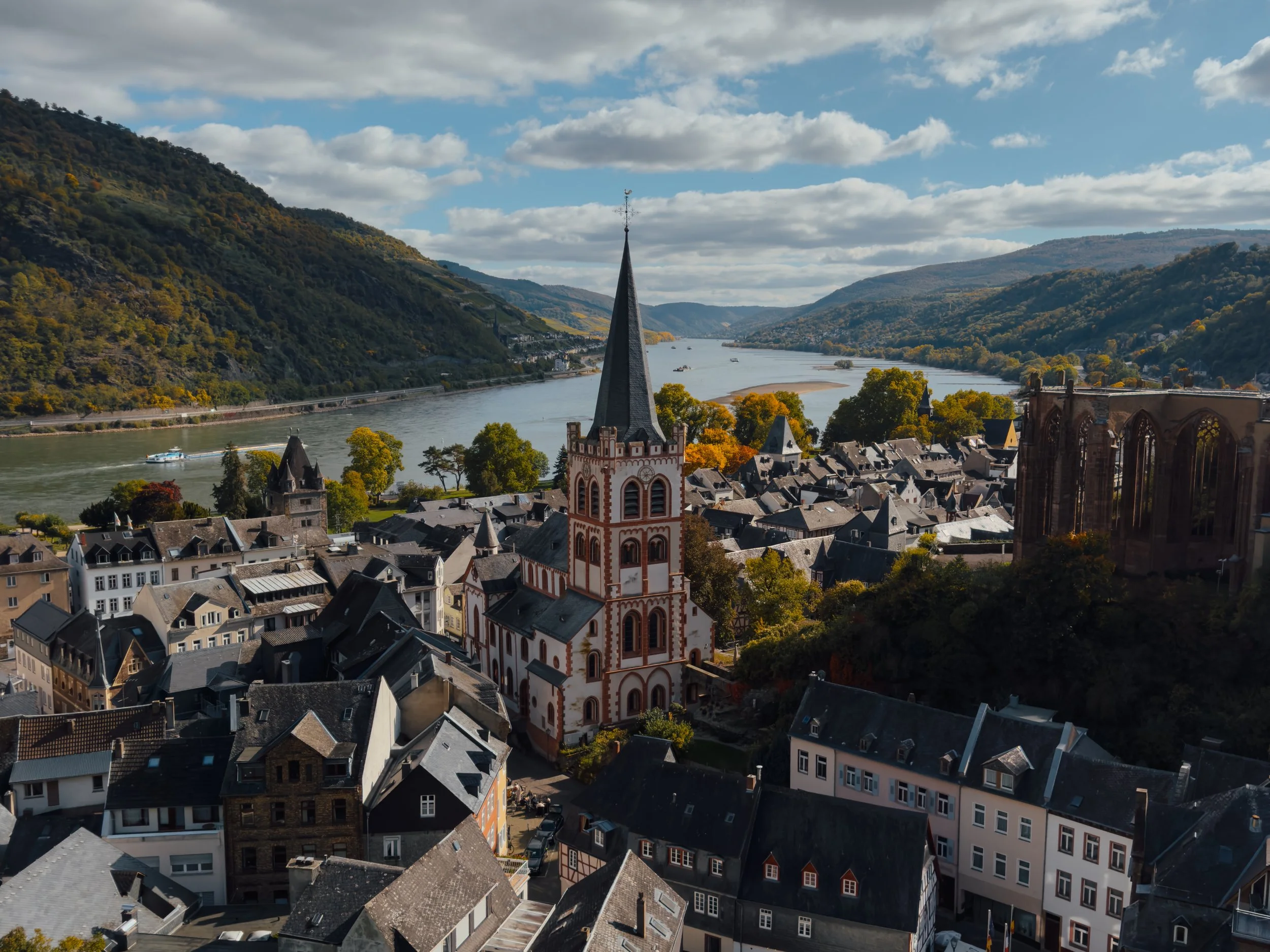
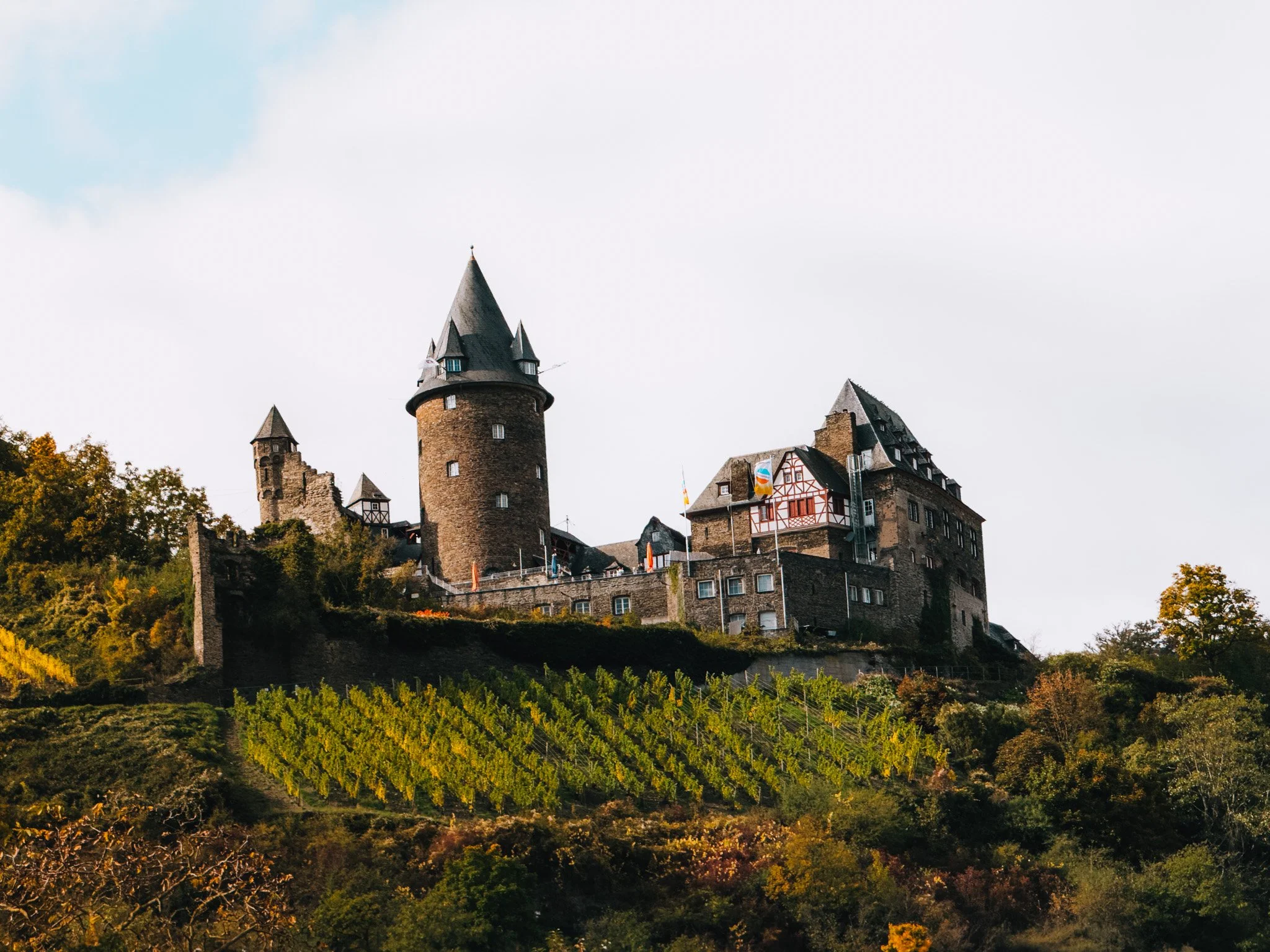
A small historic town with half-timbered houses and vineyards, topped by Burg Stahleck, now a youth hostel.
Boppard
Originally settled by the Romans, Boppard still features numerous historical sites from Roman times.
