the Highlights of the Dolomites in 7 Days
unpaid advertisement
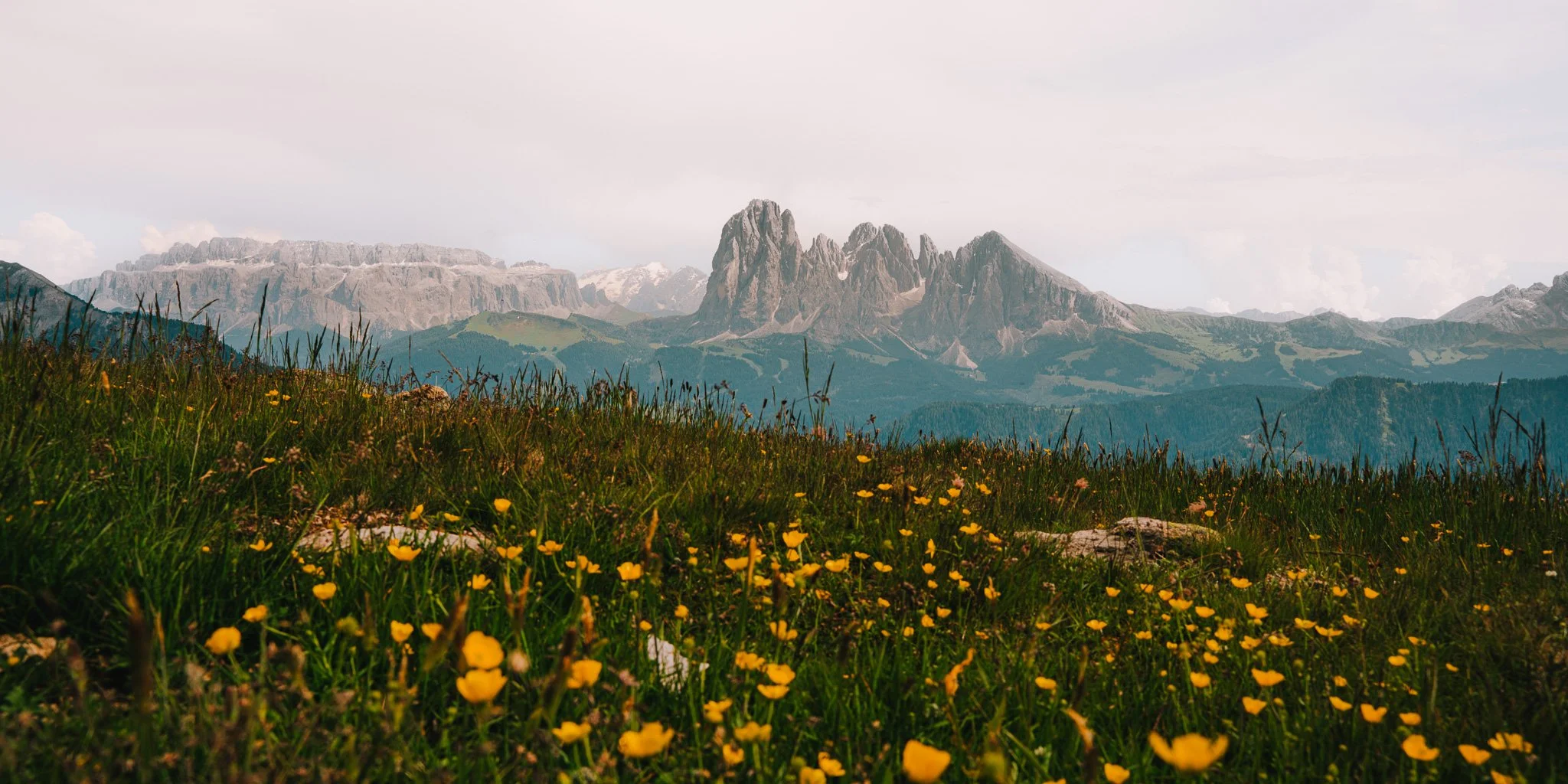
Be honest: How many times have you scrolled past photos of the Tre Cime di Lavaredo, the turquoise waters of Lago di Braies, or the dramatic ridges of Seceda and thought, “I finally need to go there”? We did just that—spending seven days exploring Europe’s most breathtaking mountain passes. While one week is barely enough to scratch the surface of the main highlights—leaving countless quiet, hidden gems undiscovered—it is the ultimate way to get an unforgettable first impression. The result: burning calves, a completely full memory card, and an incredible route through a mountain paradise you simply have to experience firsthand. In this guide, we share our favorite highlights, the best photo spots, and how to craft your perfect week in the Dolomites.
Day 1: Arrival & Val di Funes (Villnöß)
After a long drive through the picturesque Allgäu region and across the Fern Pass, we finally reached the Brenner Autobahn. Windows down, Italian pop turned up. With warm air rushing in, you instantly feel the Italian vibe.
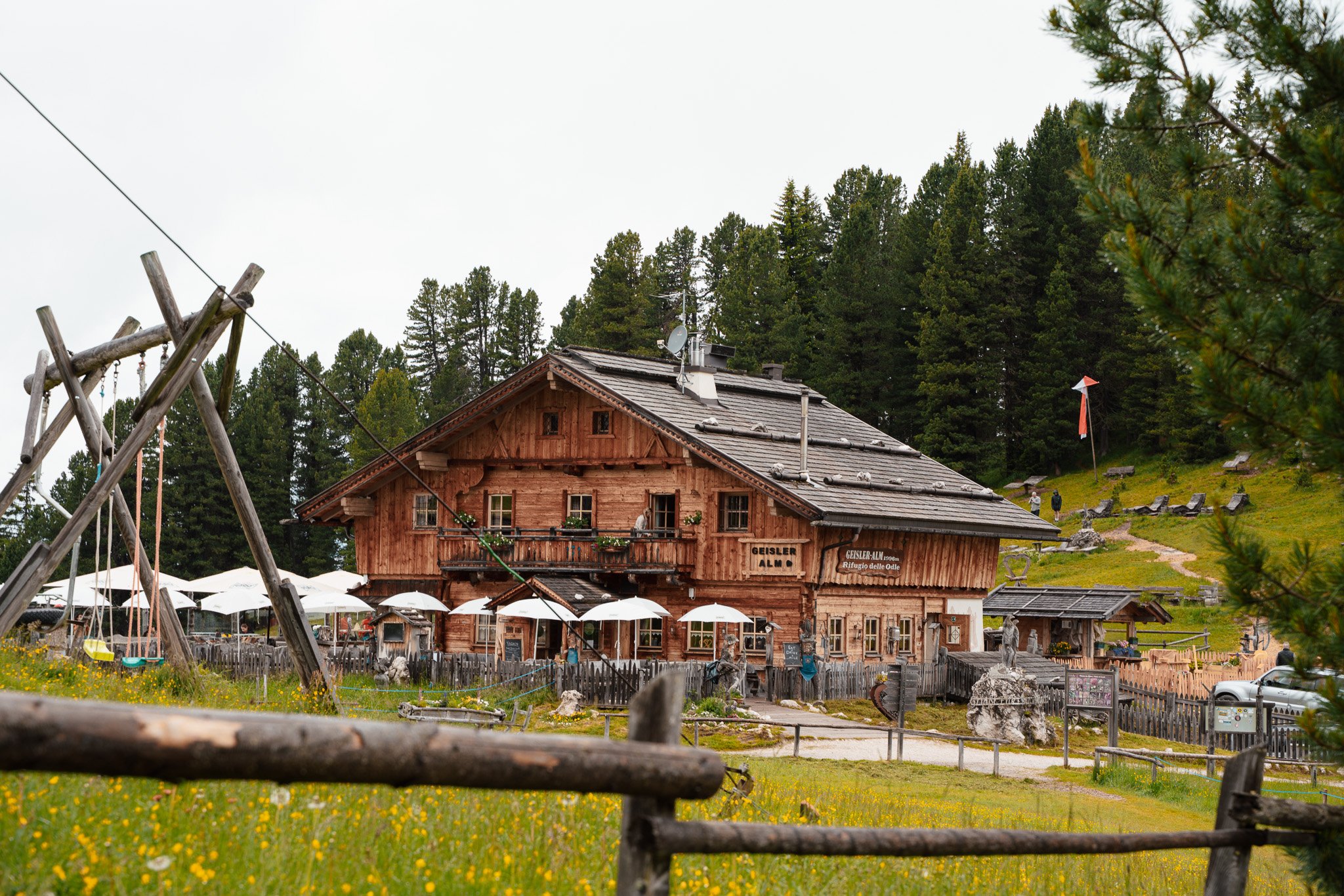
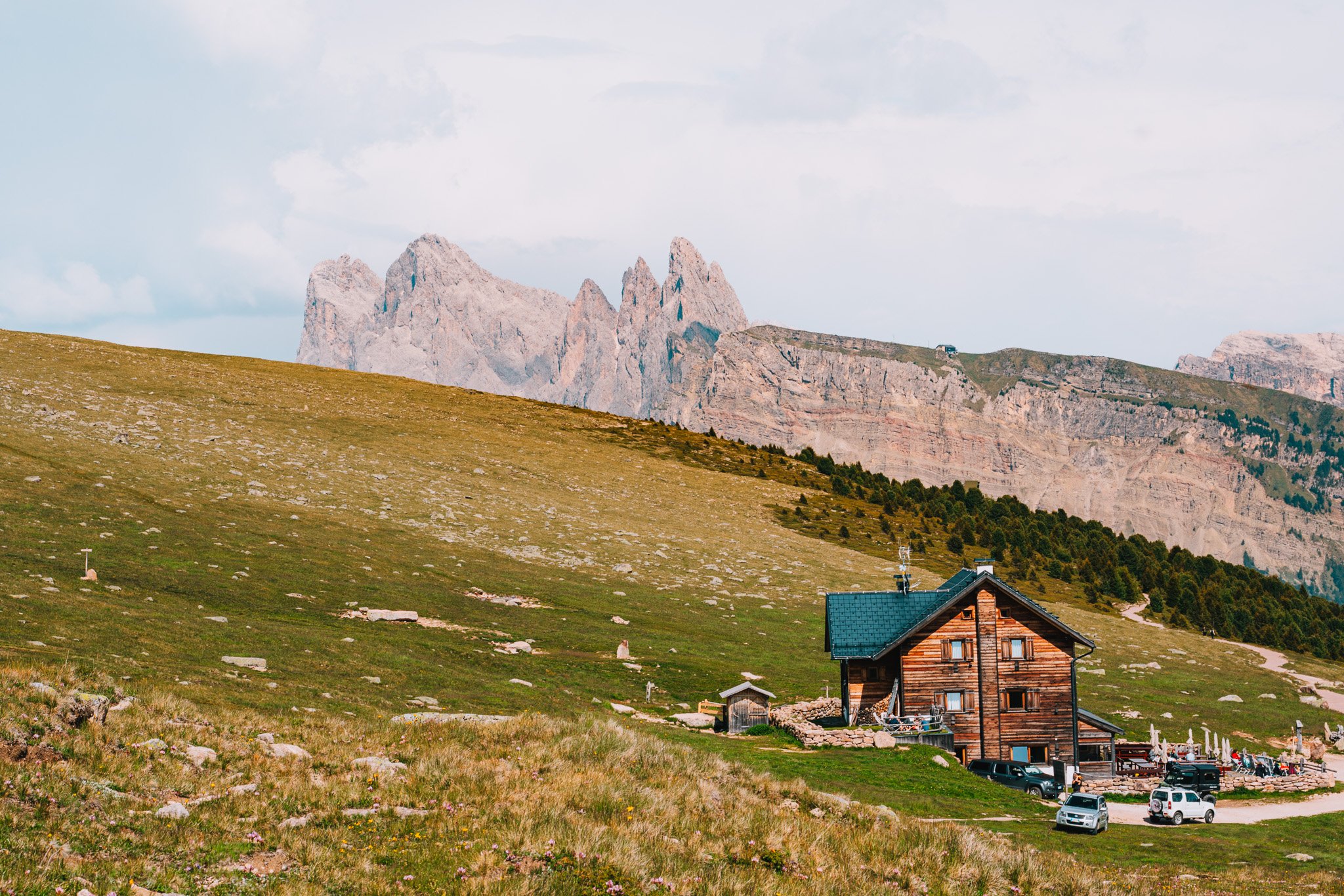
Since every vacation day counts, we headed straight into the tranquil Val di Funes (Villnößtal). It's a great strategic starting point right at the gateway to the Dolomites. Here, you'll find the scenic hike to the Geisleralm (Rifugio delle Odle). If you arrive by car, park at the paid Zans (Zannes) parking lot at the end of the valley. To avoid parking hassles—the Dolomites can get packed on weekends and during summer holidays—you can also take bus line 330.
The most famous route up is the Adolf Munkel Trail. It doesn't start directly at the lot; first, follow the old hay trail (No. 6) to St. Zenon. As everywhere in the region, the trail markers are top-notch. Still, I recommend downloading your route offline in Komoot, as cell service can be spotty.
After about two hours of hiking, we reached the Geisleralm, where delicious local dishes and refreshing lemonades awaited us.
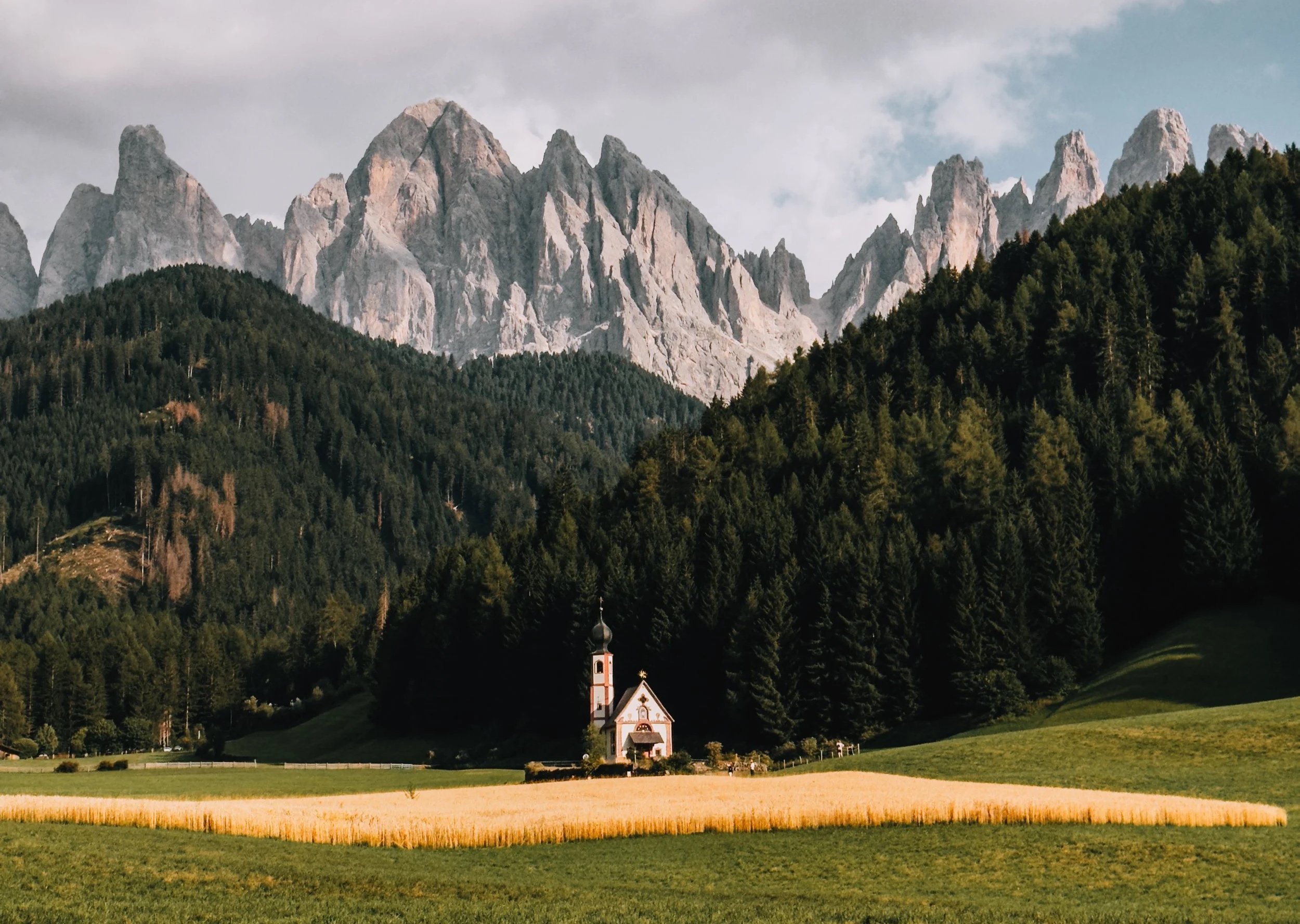
Re-energized, we made our way back down. This descent is a bit less scenic and easier, following wider forest service roads. But our day wasn't over yet: we wanted to visit the famous church of St. John in Ranui (St. Johann) and catch the sunset over the Odle (Geisler) peaks.
Checking out St. Johann is quick—the best viewpoint is right next to the parking area. Walking all the way up isn't really necessary, and entering the church requires an admission fee. Having seen plenty of chapels, we opted to skip the inside.
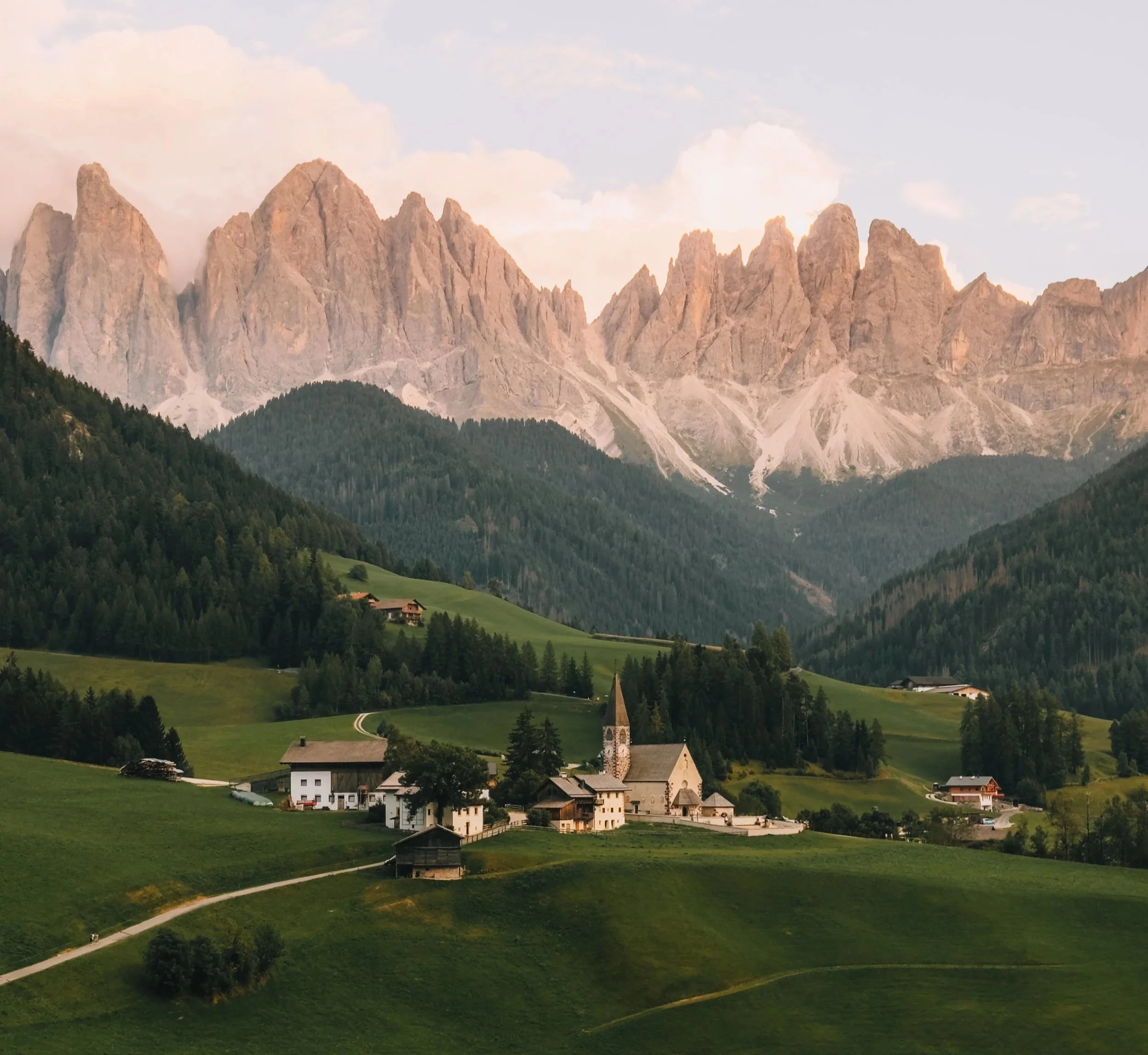
From there, we headed past the village of Santa Maddalena and its church up to the famous panoramic viewpoint. The trail is gentle and easily doable without heavy hiking boots. If you have a stroller or wheelchair, stick to the wide paved road that bypasses the church trail.
Important: The viewpoint is pedestrian-only! Many tourists drive up illegally and park across open meadows. Please don't do this—it disrupts hikers and disrespects the local farmers and residents.
We joined a small crowd waiting for sunset. Thanks to the unique mineral composition of the rock, sunsets in the Dolomites are legendary: the pale limestone lights up in fiery red and pink hues, a natural phenomenon known as Enrosadira. Clouds rolled in just beforehand on our visit, so we missed the full glow, but the panoramic views were still magical.
Day 2: Alpe di Siusi (Seiser Alm)
An early start was on the agenda for our hike across the Alpe di Siusi, Europe's largest high-altitude alpine meadow. You can reach it by car, bus, or cable car.
Driving Rule: You may only drive up to Compatsch by private car before 9:00 AM and after 5:00 PM (driving down is permitted anytime). Between 9:00 AM and 5:00 PM, access is restricted to cable cars from Ortisei (St. Ulrich) or Siusi (Seis).
We set off at sunrise before the summer heat kicked in. The four-hour route led us from Compatsch to Saltria and up toward Sporthotel Sonne. Best of all, we avoided paved roads for most of the morning, sticking to narrow trails through meadows and pine woods. It was pure alpine idyll.
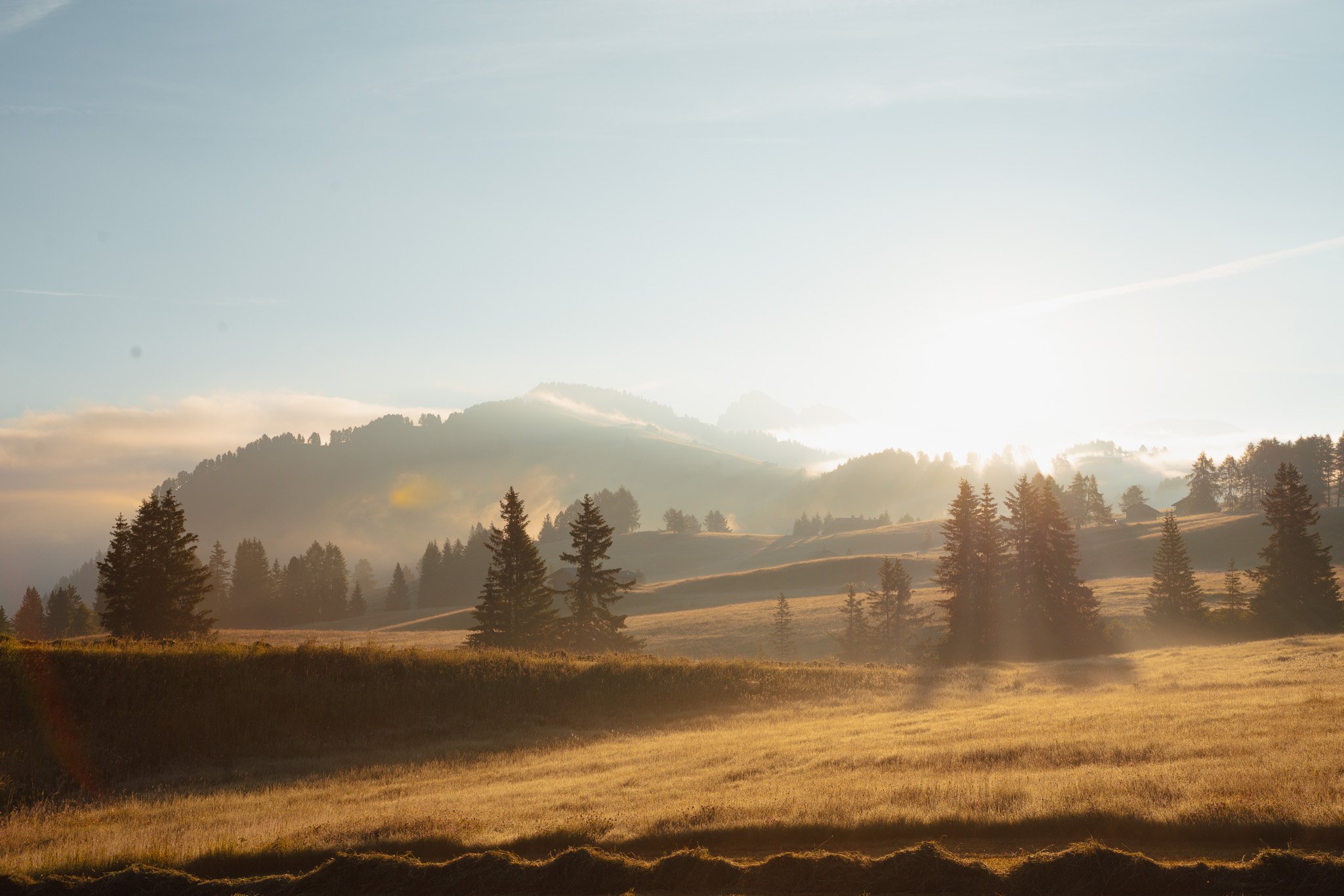
Passing grazing Haflinger horses, we arrived at THE iconic Alpe di Siusi viewpoint. Surprisingly, it was far less crowded than anticipated! After a quick breather, we followed the paved lane down to Gostner Schwaige for lunch.
We ordered traditional dumplings (Knödel) and caramelized Kaiserschmarrn—and honestly, I am still dreaming about that shredded pancake.
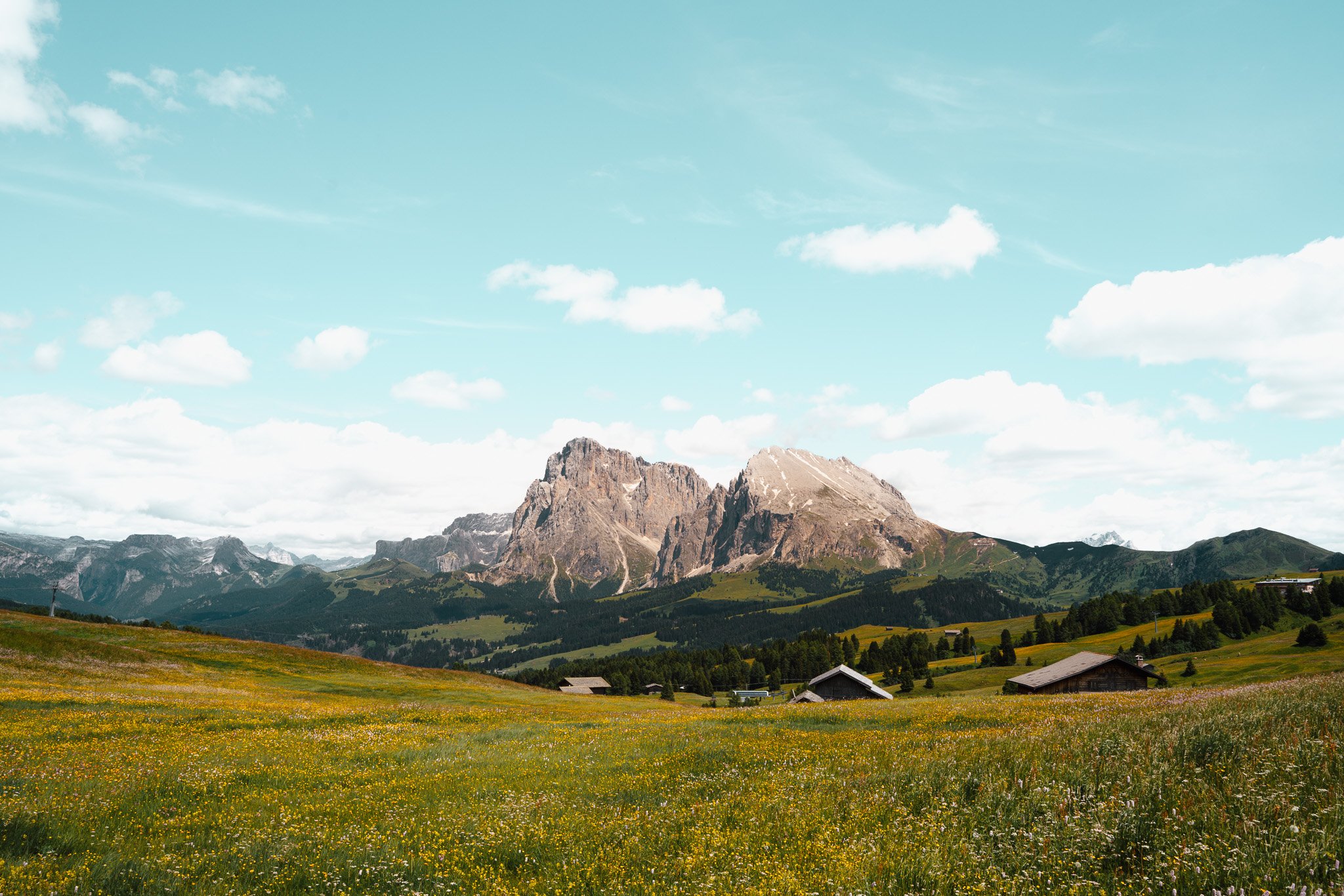
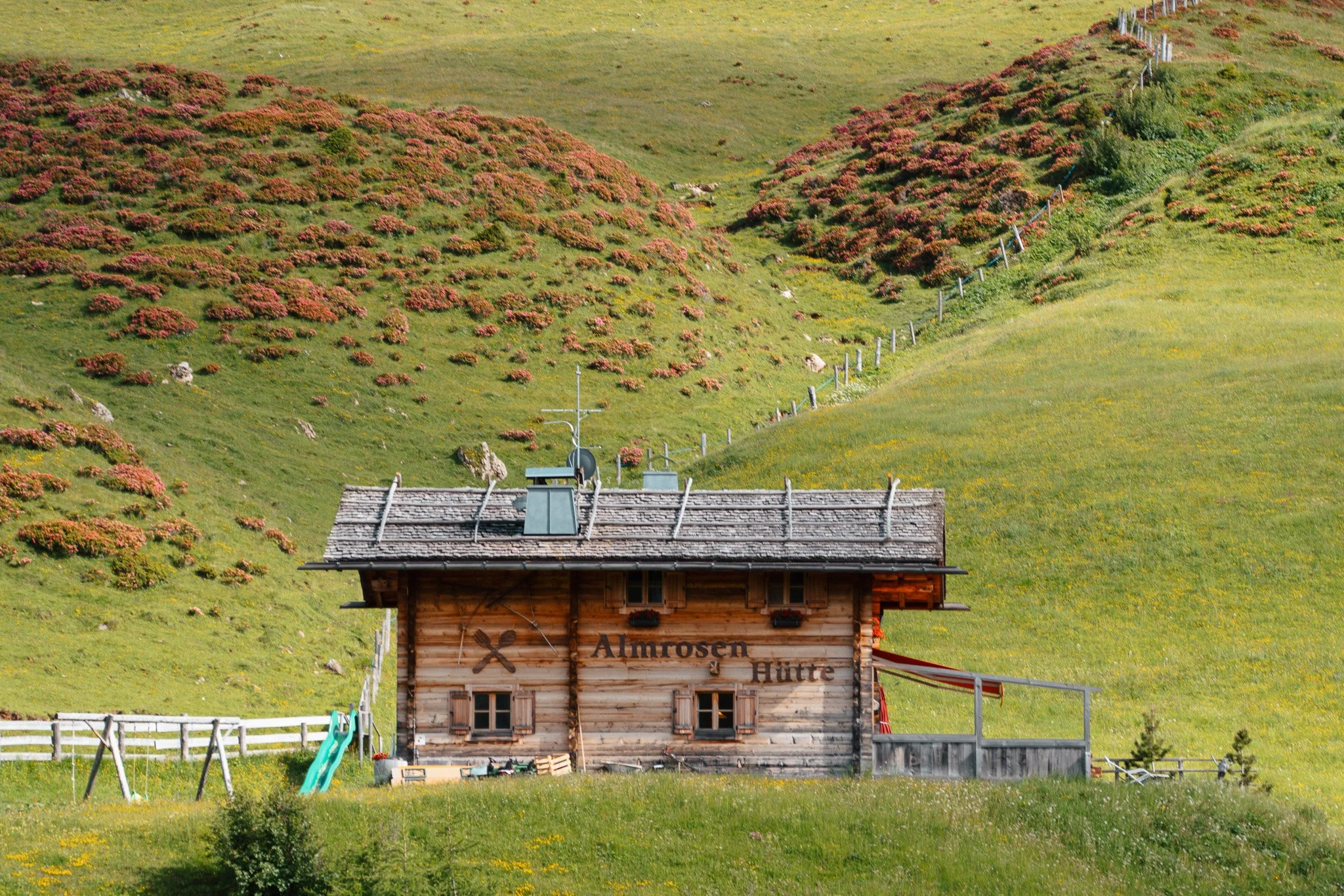
In the afternoon, we decided to hike further to the Almrosenhütte. This stretch mostly followed paved access roads. While the viewpoints along the way were gorgeous, we found ourselves wishing for e-bikes here. Unless you stick strictly to hiking paths like our morning route, an e-bike is the best way to get around the Alpe di Siusi, as distances are vast and many paths are wide gravel or paved roads.
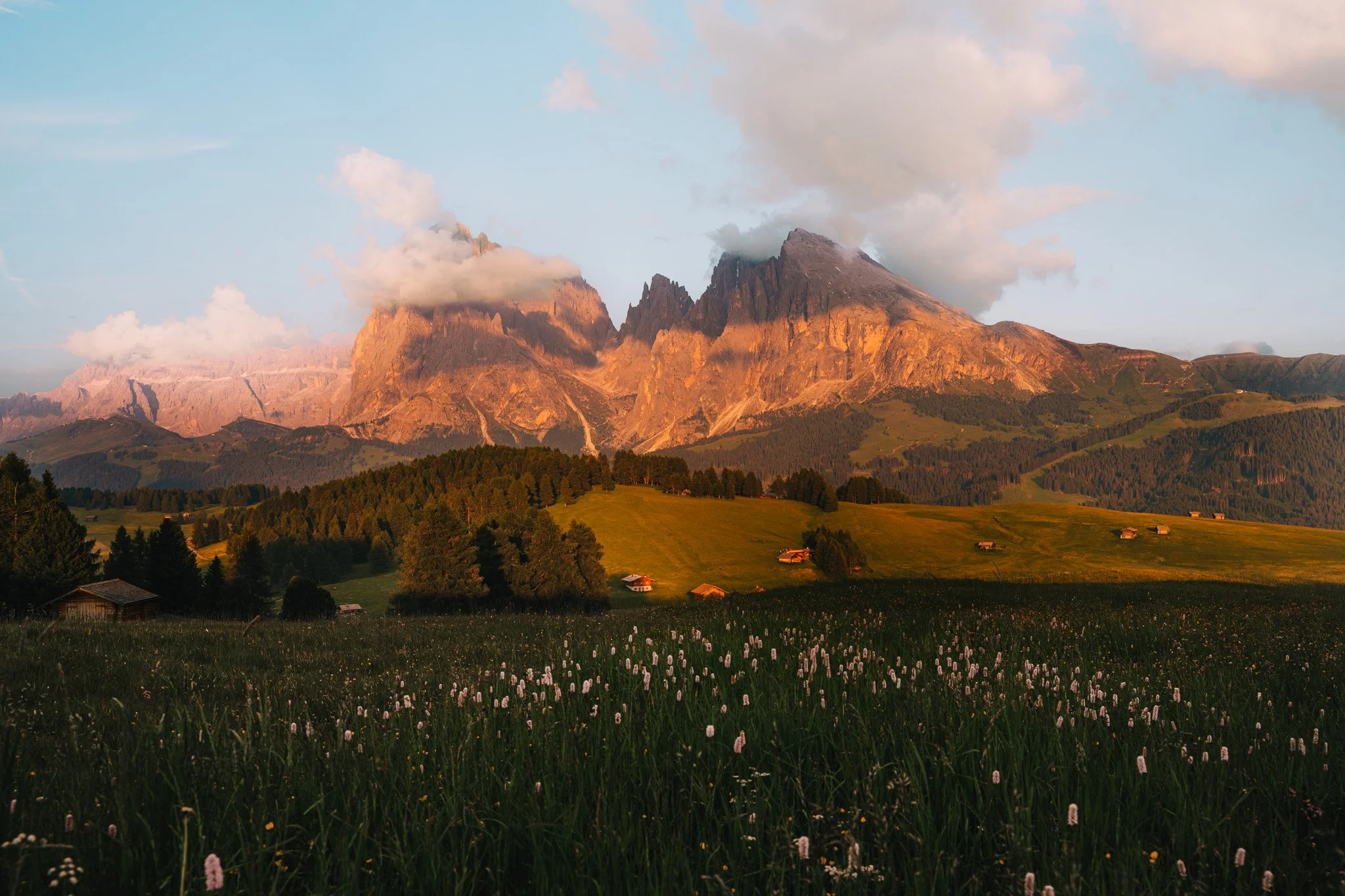
We grabbed a quick bite at the Heualm before heading toward a sunset perch. Instead of hiking all the way up to the highest panorama point, we settled into a spot further down. This time, luck was on our side, and we caught a glimpse of the glowing Enrosadira.
As darkness fell, we walked the well-marked road back to Compatsch—noticing once again how many drivers blithely ignore the access restrictions.
Day 3: A Relaxed Rest Day
With temperatures soaring past 30°C (86°F), it was simply too hot for serious hiking, so we dialed things back.
We strolled through the picturesque village of Castelrotto (Kastelruth) and spent a few hours lounging at the open-air pool in Telfen, which comes with incredible mountain views.
Later, we headed to the Völser Weiher (Laghetto di Fiè) for an easy stroll and a cool swim. You can drive right up to the lake parking lot without tackling any steep inclines. The lake is well-equipped with changing rooms, restrooms, showers, and restaurants, making it effortless to spend a leisurely afternoon there.
Day 4: In & Around Ortisei (St. Ulrich)
We spent day four based around Ortisei (St. Ulrich). First, we took the funicular up to the Resciesa (Raschötz) plateau. Rain caught us off guard near the top, so we ducked into the mountain chalet to wait it out. Once the storm passed, we walked over to the Holy Cross Chapel (Heiligkreuzkapelle). The trail serves up sweeping views toward Alpe di Siusi and the Odle group. Since this is an out-and-back trail, we got to enjoy those vistas twice.
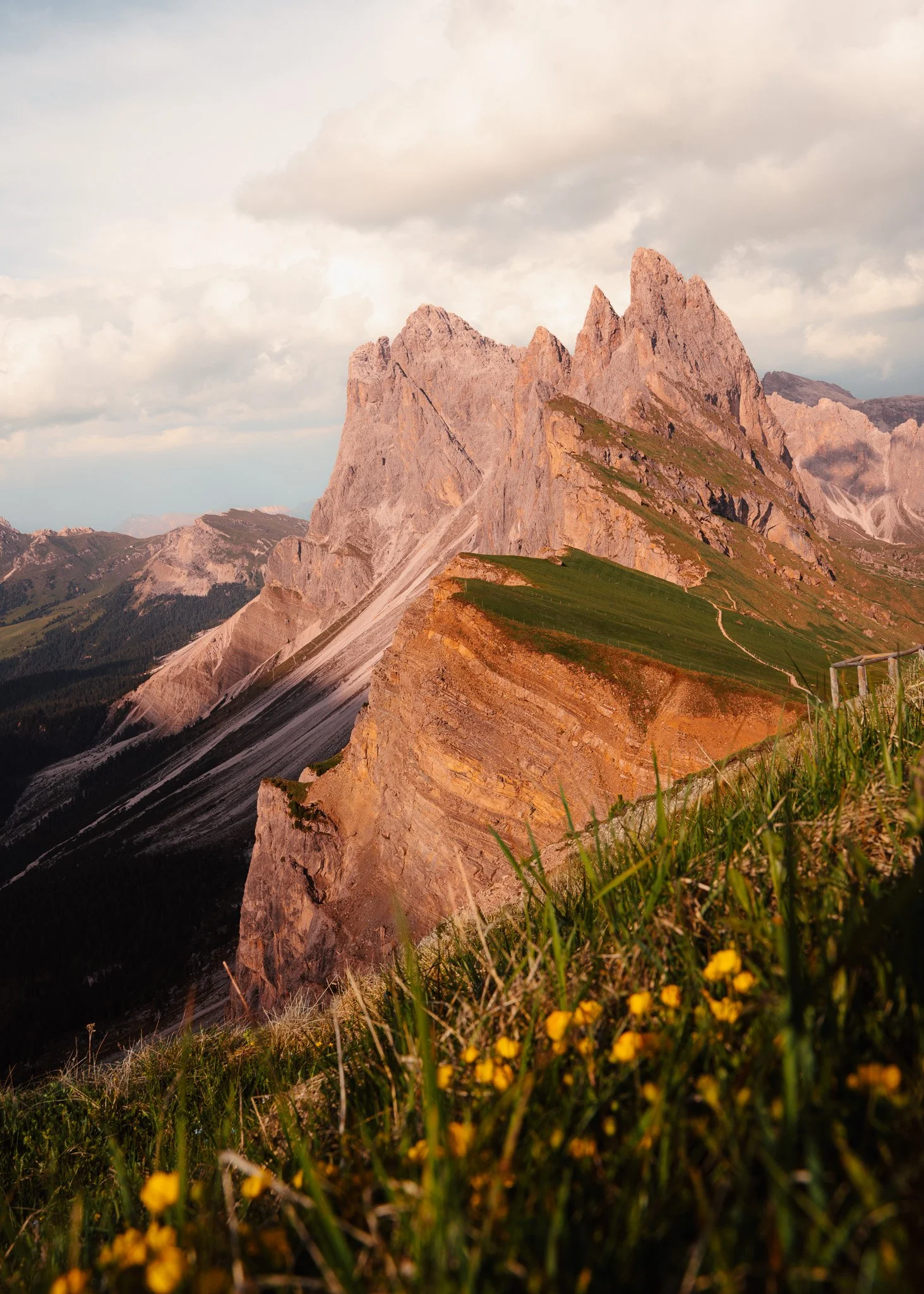
Back down in Ortisei, we caught the last afternoon cable car up to Seceda. The plan: watch the sunset over the dramatic Odle ridge and hike the roughly two-hour descent back to the valley on foot.
At first, the conditions were pristine, but dense clouds moved in fast, obscuring the sunset yet again. We hurried our descent to make it down before complete darkness. The direct hiking trail down from Seceda to Ortisei isn't something I’d recommend: it drops steeply along gravel ski runs and lacks scenic charm. Next time, I’d book an overnight stay at one of the mountain rifugios up top—and only when a solid weather window is forecast.
Day 5: From Lago di Carezza to the Tre Cime
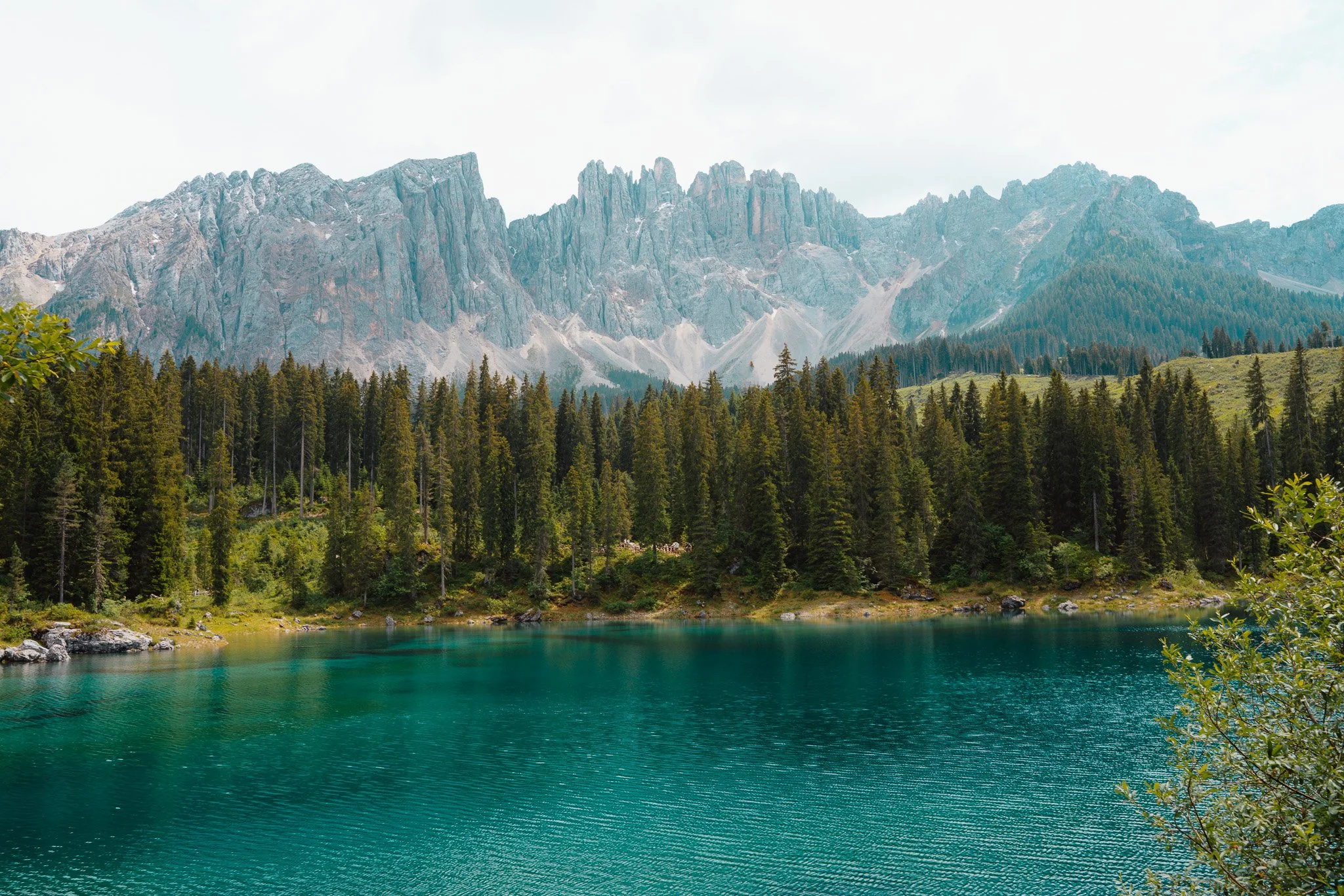
We kicked off the morning at Lago di Carezza (Karersee), nestled below the Latemar and Catinaccio (Rosengarten) massifs. Its algae-rich water has a brilliant, crystalline turquoise sheen. Parking is right by the lake, and with high turnover, spots open up regularly. The 40-minute loop trail around the shoreline is well worth doing.
The surrounding Rosengarten range is a premier hiking hub, though we had to save longer routes there for another trip.
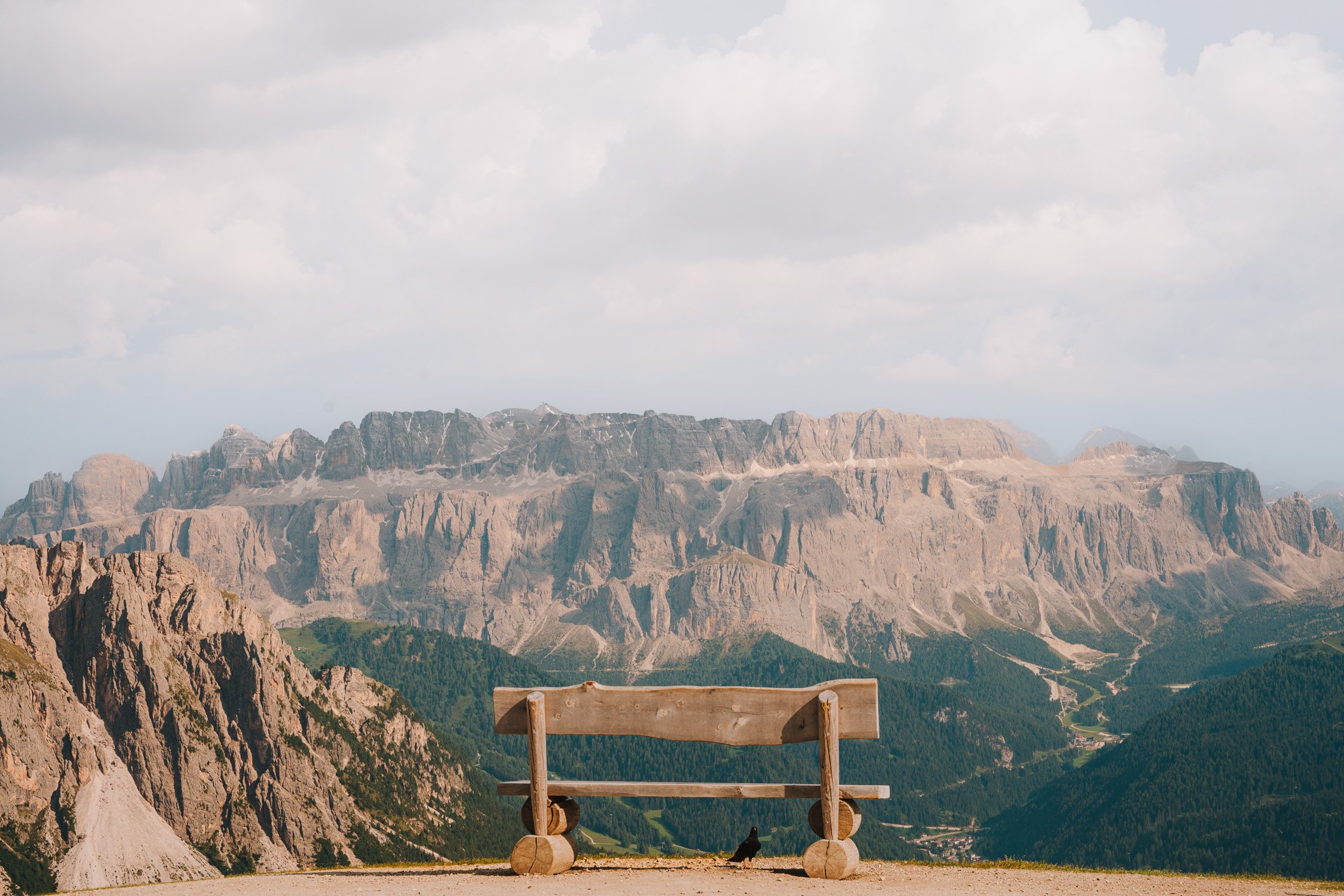
From Carezza, we drove over the Sella Pass and the Gardena Pass. This stretch is a quintessential Dolomite road-trip highlight, with jaw-dropping views around every hairpin turn that practically demand a photo stop.
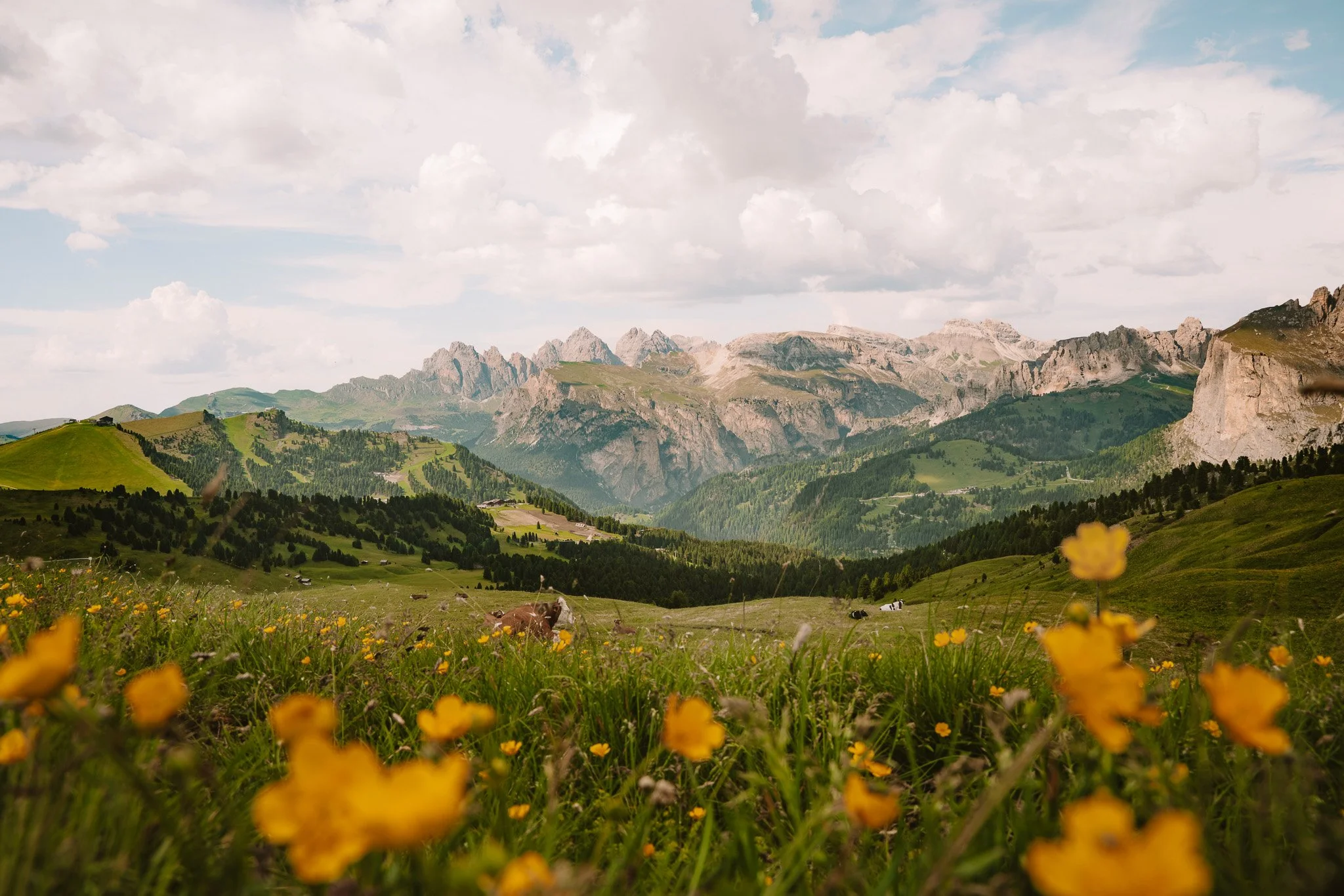
At Gardena Pass, we set out toward Jimmi Hütte for lunch, only to find it had closed early due to a light drizzle. The trail from the parking area is short—about a 20-minute climb. For via ferrata enthusiasts, this is also the trailhead for the Gran Cir route.
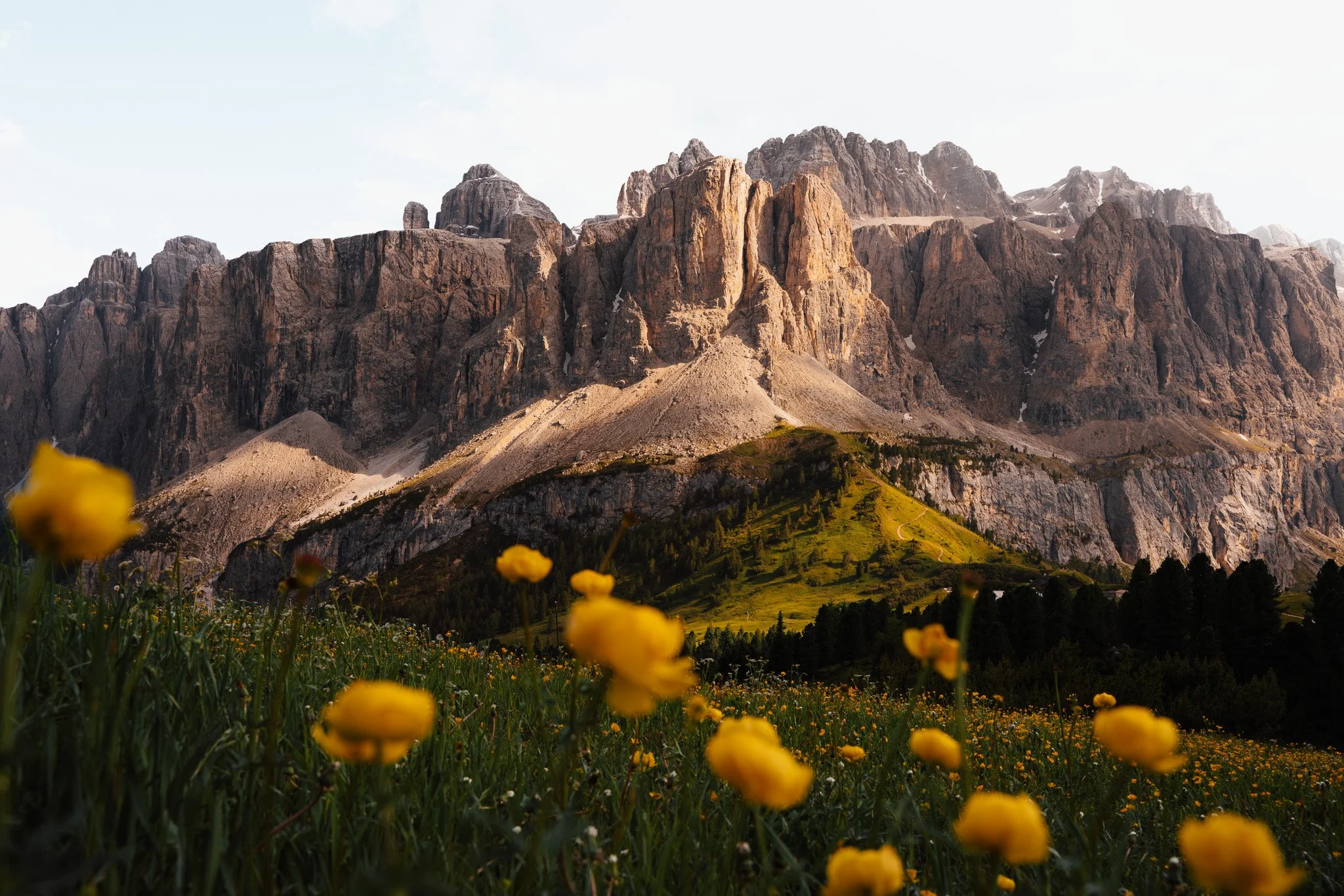
With the alpine hut closed, we stopped for a bite at Chalet Gerard overlooking the Sella massif. The food was fantastic, and the panoramic views out the window rivaled any mountain hut.
From there, it was a scenic one-hour drive down into Dobbiaco (Toblach).
Day 6: Tre Cime di Lavaredo (Drei Zinnen)
Dobbiaco served as our home base for the Tre Cime di Lavaredo. From town, it takes about an hour to drive up to Rifugio Auronzo. Along the way, we pulled over at the roadside Drei-Zinnen-Blick viewpoint for a classic preview of the peaks, watching cyclists coast along the riverside path below.
Our next quick stop was Lago di Landro (Dürrensee)—one of the few alpine lakes where swimming is permitted. Several people were out paddling and cooling off. Parking is right off the main road, directly adjacent to the shore.
Then came the main event: the Tre Cime.
Toll Road & Parking: You must reserve your parking slot online in advance and enter during your designated time window.
Shuttle Bus: The public bus also requires advance booking. Note that you must select a fixed return departure time—if you hike at a slower pace, you risk missing your booked slot.
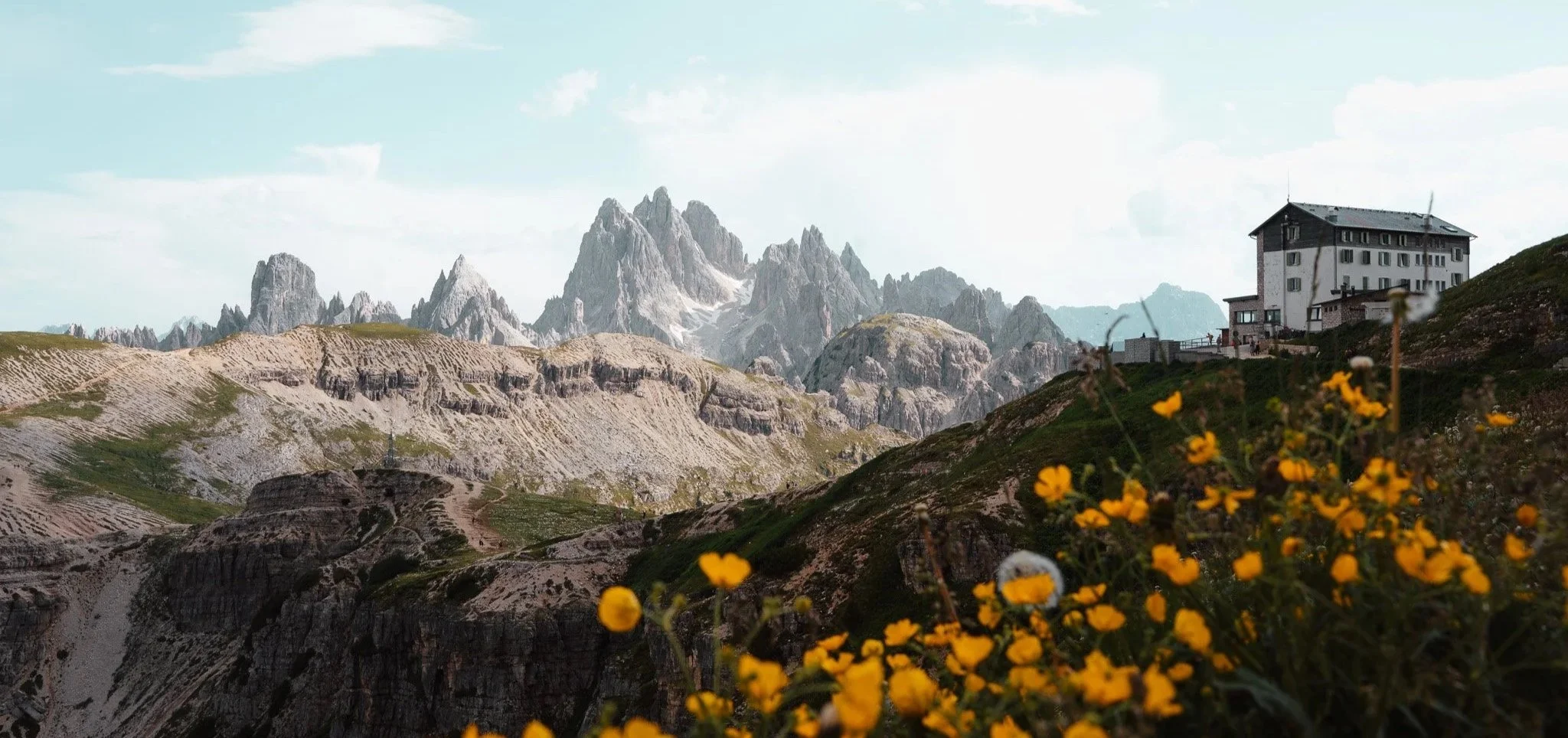
We made it about a third of the way around the loop when the sky darkened rapidly and lightning flickered in the distance. We turned back toward Rifugio Auronzo to play it safe. The storm skirted past, so we grabbed a coffee on the panoramic deck before walking over to the Cadini di Misurina viewpoint for sunset.
Tre Cime, you are stunning—even if this was our second attempt thwarted by weather. Third time’s the charm! We headed back to our apartment in Dobbiaco to cook dinner and watch the lightning storm illuminate the peaks from our window.
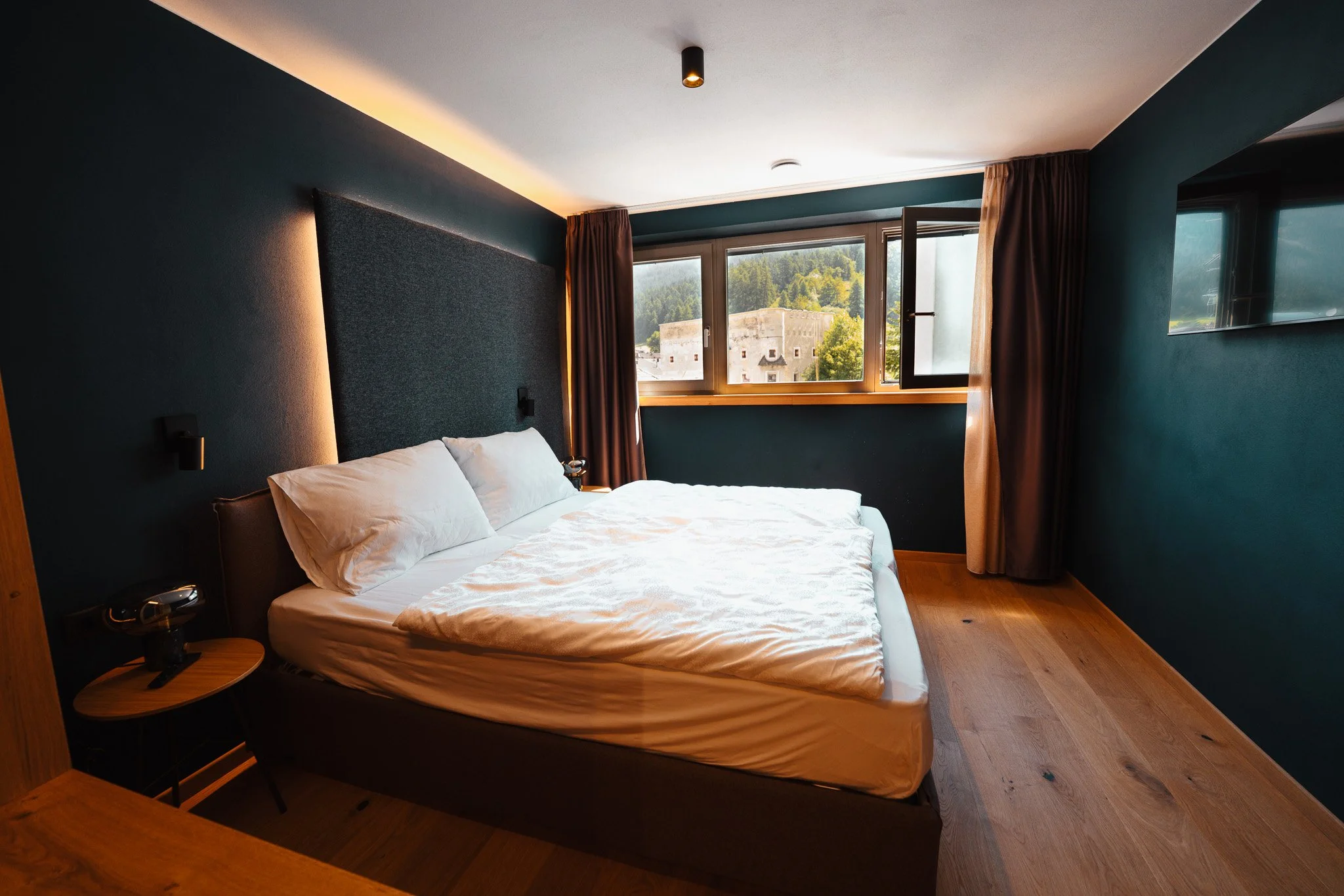
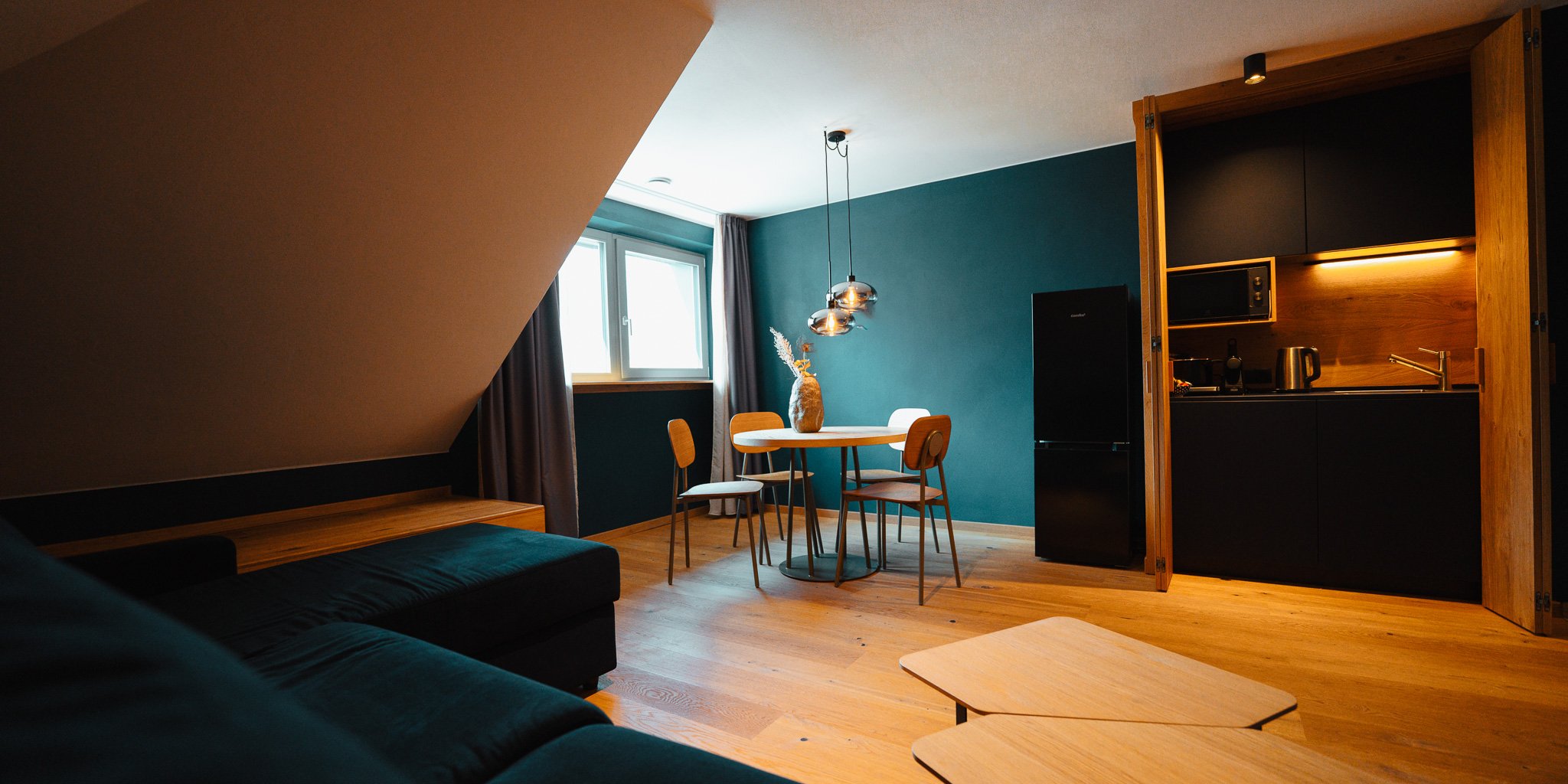
unpaid advertisement | We stayed at The Post Mountain Residence in central Dobbiaco and couldn't recommend it more. The apartments are spacious, modern, and stylishly designed. They also provide free underground garage parking—a massive perk after dealing with Dolomite parking logistics all week. You can find the full review here.
Day 7: Lago di Braies & Journey Home
We started our final morning with breakfast at a pastry shop on the town square, treating ourselves to coffee and intricate pastries—including one shaped like the Tre Cime. If we couldn't complete the full circuit on foot, we could at least eat them!
Next, we drove into the Braies Valley to visit Lago di Braies (Pragser Wildsee). Vehicle access here is also strictly regulated during summer, requiring a pre-booked entry ticket.
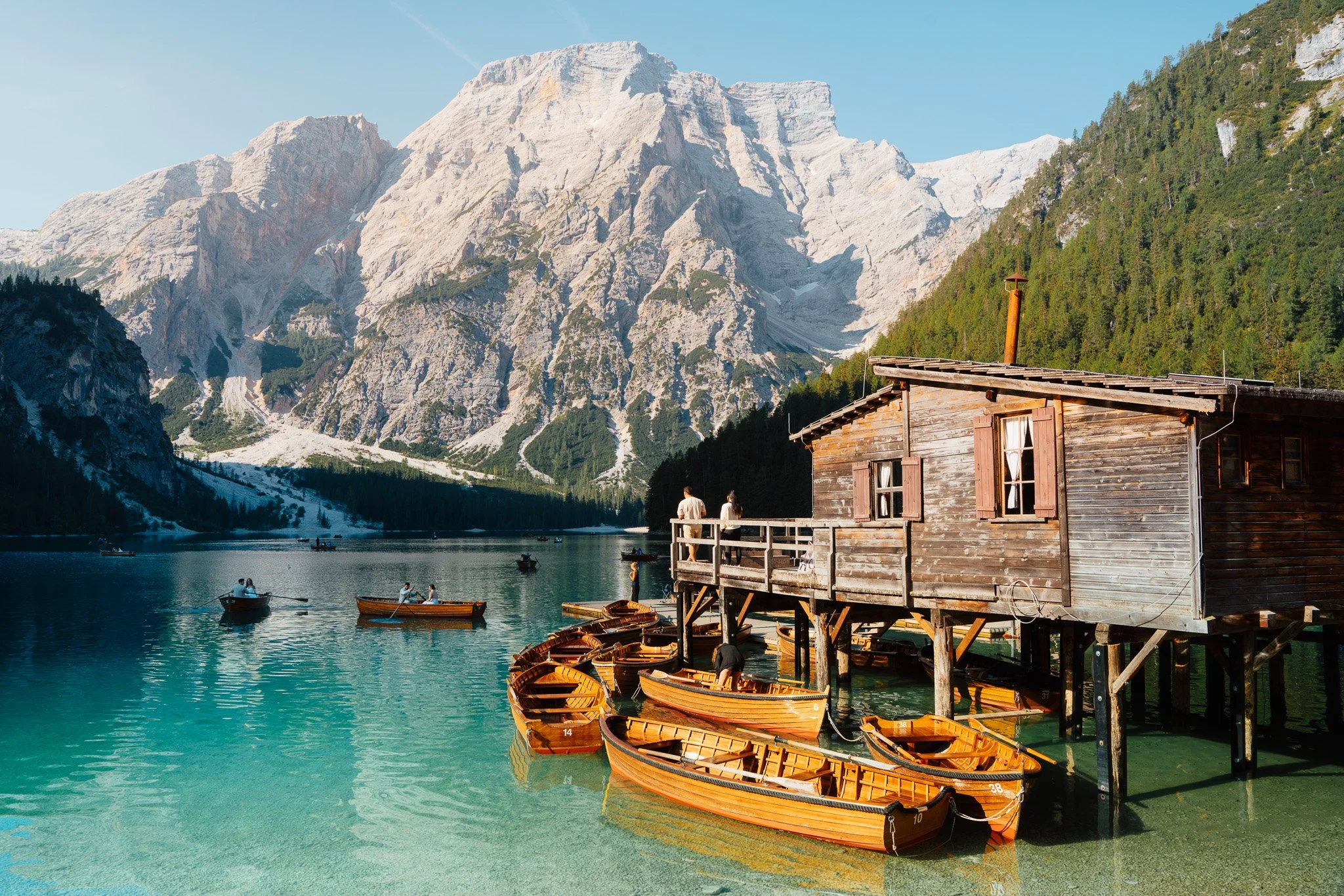
Cradled between towering limestone walls, the lake is undeniably photogenic, but predictably very tourist-heavy. You can walk the full loop around the shoreline in about two hours; swimming is prohibited.
From there, it was time to hit the road back home. Until next time, Dolomites!
