10 Castles you need to visit in the German state Rhineland-Palatinate
Rhineland-Palatinate is rightly known as the land of castles. Of the well over 500 documented castles that existed during the Middle Ages, 108 castles are still very well preserved today. They can be found across all ten holiday regions of Rhineland-Palatinate, with the highest density along the Rhine Valley. I will deliberately leave those out here – you can find a separate blog post about them.
Today, I’m introducing my 10 personal favourites, all of which can be visited and explored.
1. Burg Eltz
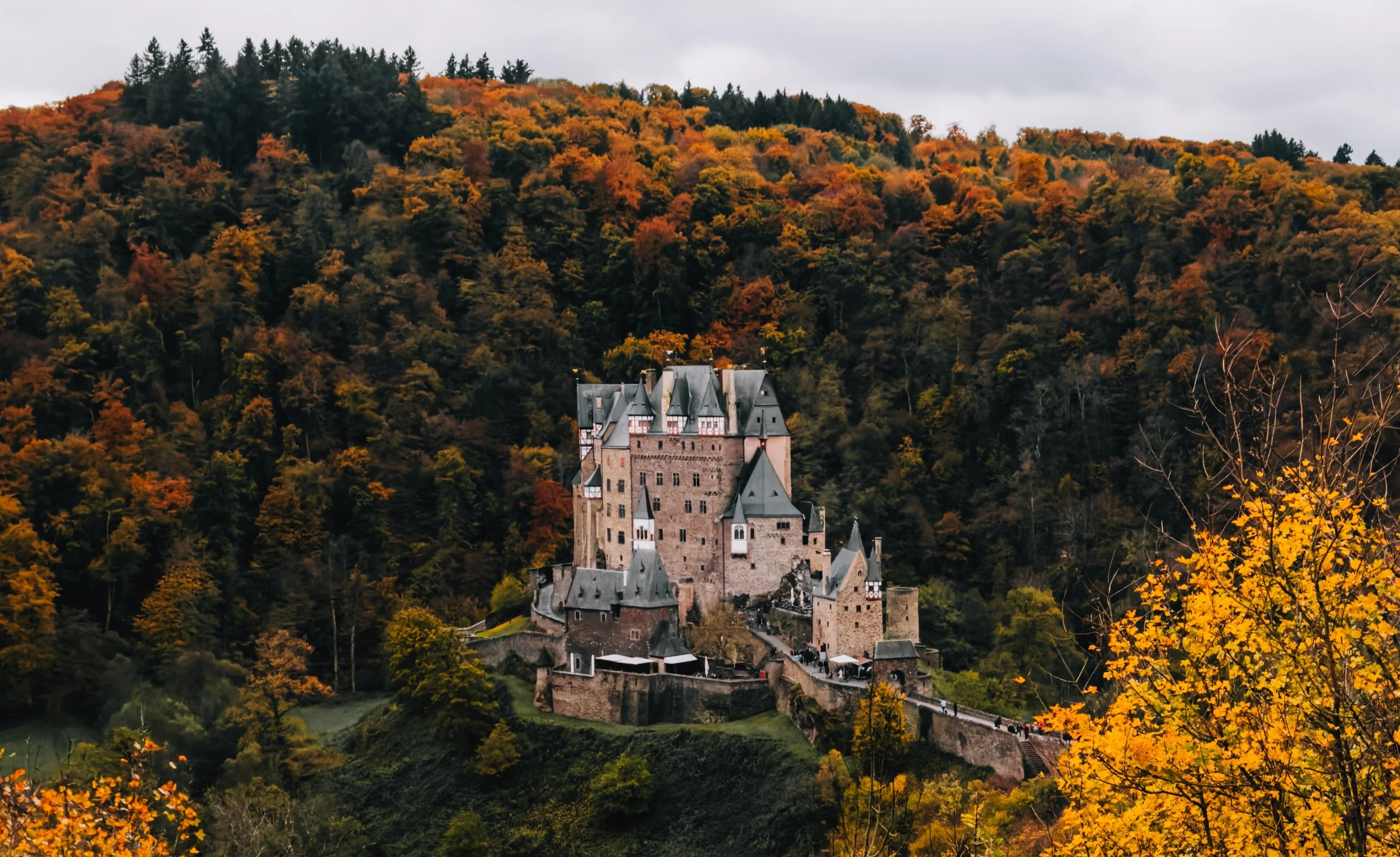
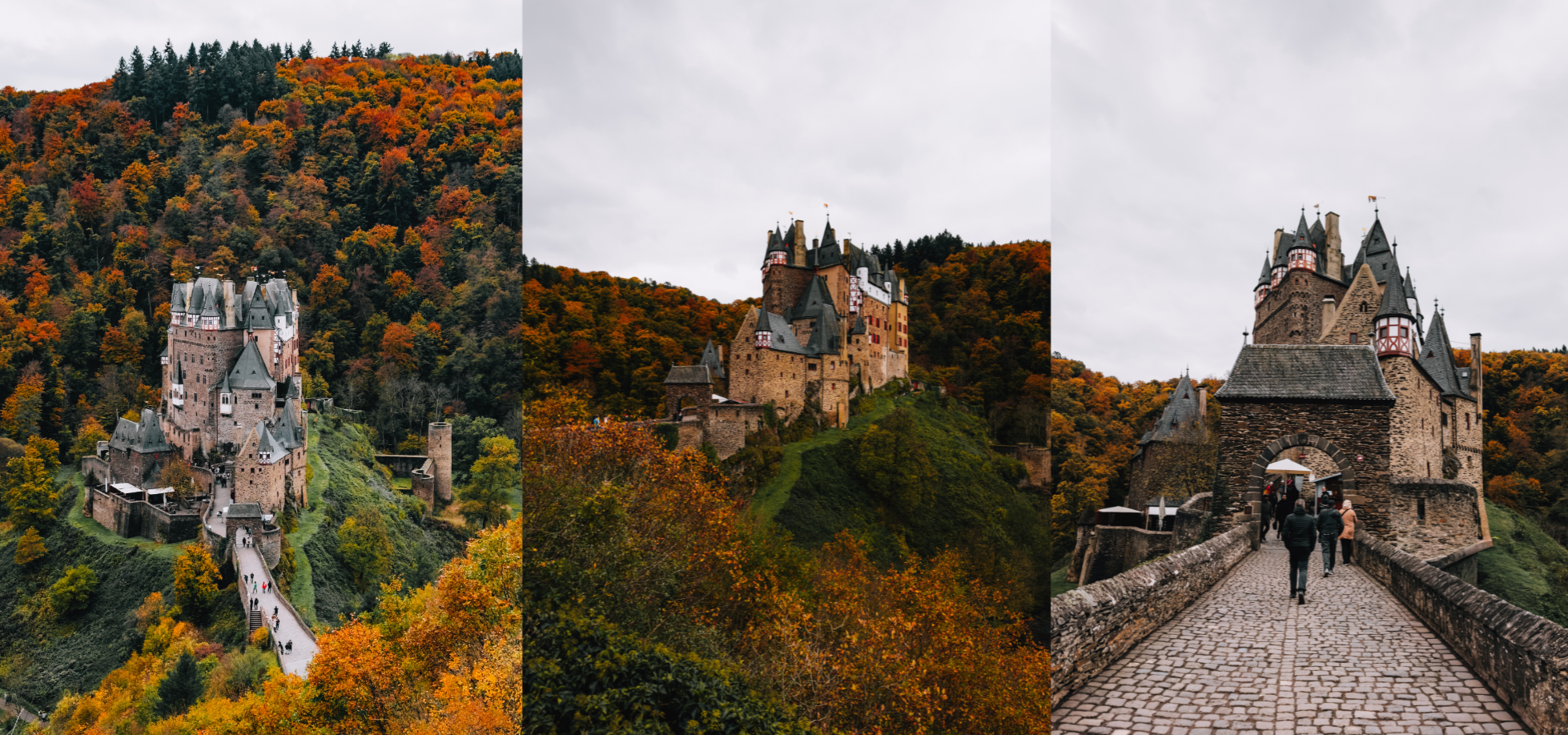
Burg Eltz is probably the best-preserved medieval castle I have visited in Germany so far. The castle has been owned by the same family for over 850 years. Life in the Eltz Valley was relatively peaceful – only one conflict is recorded, largely thanks to the family’s strong diplomacy and political skill.
The castle was built in the 12th century by the Eltz family, which split into three branches in the 13th century. All three families lived together in the castle, each building their own residence. This is why Burg Eltz has its distinctive appearance today, with numerous towers and bay windows. Inside, original furnishings from the 17th century can still be seen, while the kitchen even dates back to the 15th century.
Entry to the castle is only possible with a 45-minute guided tour (German and English). Tours start every 10–15 minutes, so waiting times are usually short.
How to get there:
By public transport (bus line 365 – timetable available online) or by car. The car park is paid (day tickets). From there, it’s a short downhill walk to the castle, or you can take a paid shuttle bus directly to the entrance.
You can also reach the castle on foot via hiking trails. A particularly beautiful hike is the “Eltzer Burgenpanorama” trail. More information here.
Opening hours: 9:30 am – 5 pm (last entry), closed November–March
Admission: €14 adults, €7 reduced
More information can be found on the official website.
2. Reichsburg Cochem
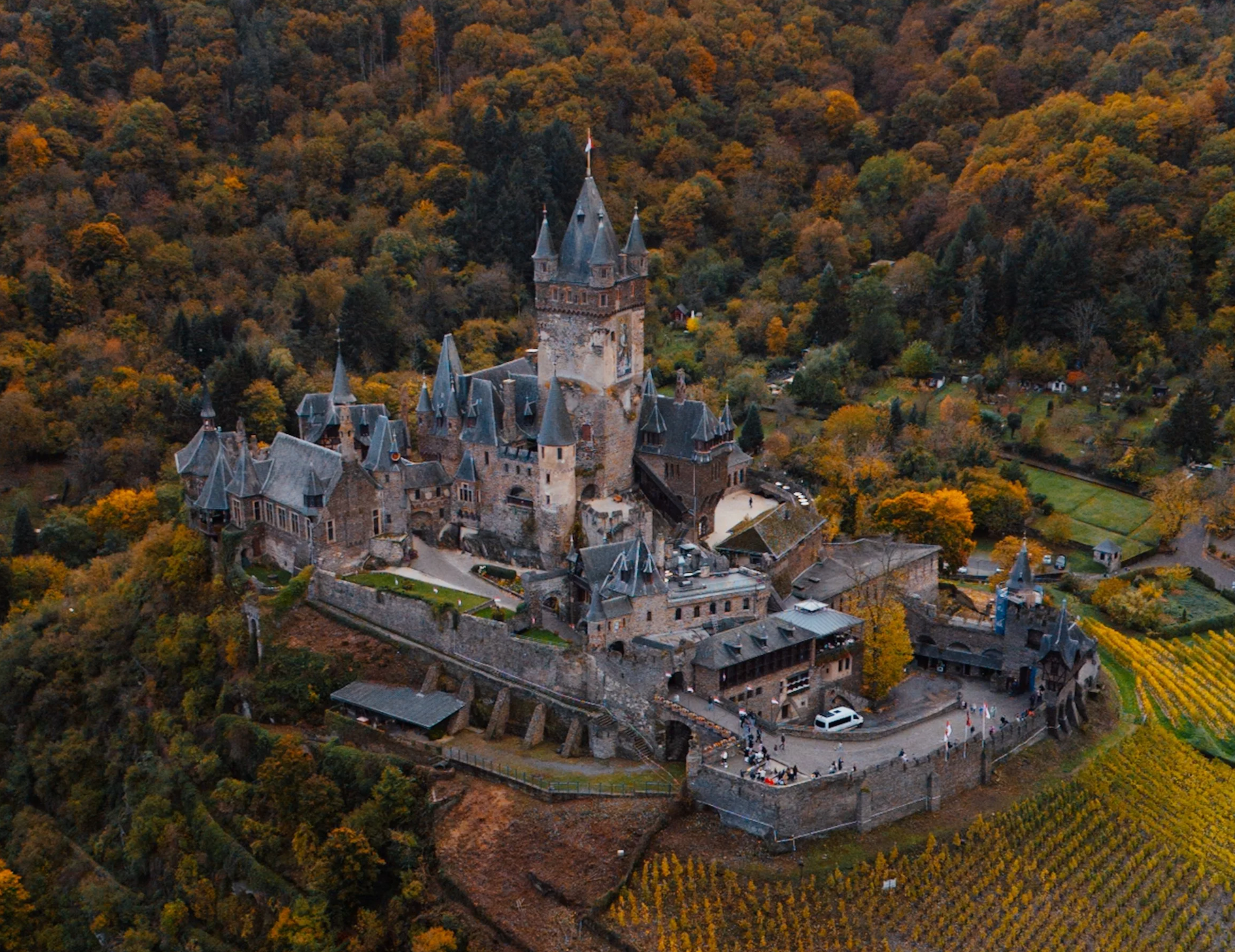
Reichsburg Cochem towers 100 metres above the Moselle River, overlooking the town of Cochem and surrounded by vineyards. The first construction phase likely began around 1056, with further fortifications added in the 14th century. The castle was damaged during the War of the Palatine Succession in the 17th century and rebuilt in the 19th century in a Neo-Gothic style during the Romantic period.
The castle can only be visited as part of a 40-minute guided tour. It is reached via a walk through the village and vineyards. Paid parking is available along the Moselle riverbank. Free parking is available on the opposite side of the river, about a 10–15 minute walk from the town centre.
Opening hours: seasonal – best checked in advance here
Summer season: 9:30 am – 5 pm (start of last tour)
Admission: €10 adults, €5 children, €8 reduced; family tickets available

3. Schloss Bürresheim
Like Burg Eltz, Schloss Bürresheim was never conquered or looted and was even inhabited until 1938. When the family fled to Canada, they left behind not only the complete furnishings but all of their possessions.
Although it was originally a castle, the lavish interior justifies calling it a palace. The original double castle was built in the 12th century to secure the border between the Archbishoprics of Trier and Cologne.
Visits are only possible as part of a guided tour. Free parking is available below the castle.
The surrounding untouched nature makes the area ideal for hiking. Schloss Bürresheim lies along the “Förstersteig” trail.
Opening hours:
15 March – 31 October: Thursday–Sunday & public holidays, 10 am–6 pm
Winter: Saturdays, Sundays & public holidays, 10 am–5 pm
Closed December & January
Admission: €6 adults, €5 reduced, €3 children (up to 17)

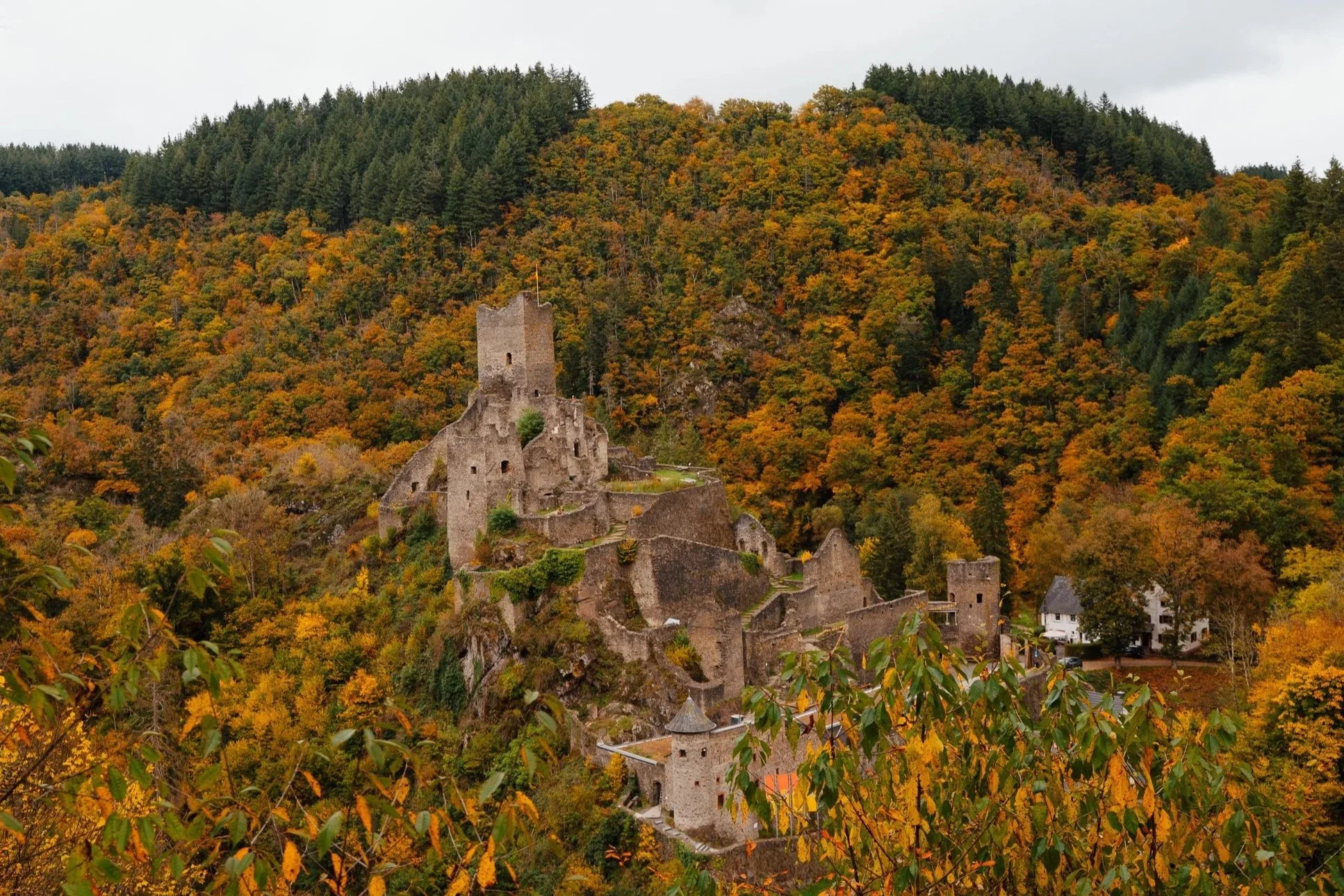
4. Manderscheid Castles
Manderscheid is home to not just one, but two castles. Built as prestigious seats of power, both were destroyed in the 17th century.
The Upper Castle can be visited for free, while the Lower Castle requires an entrance fee. Paid parking is available below the Lower Castle. The Upper Castle can only be reached via a steep path. During Advent weekends, a medieval Christmas market is held here.
Both castles lie along several hiking routes, including the Manderscheid Castle Trail (German only, but you can download the map!) and the Grafschaft Trail.
Opening hours:
April–November: daily 11 am–5 pm
December–March: Saturdays & Sundays, 12 pm–3 pm
Admission: €5 adults, €3 children
5. Burg Berwartstein
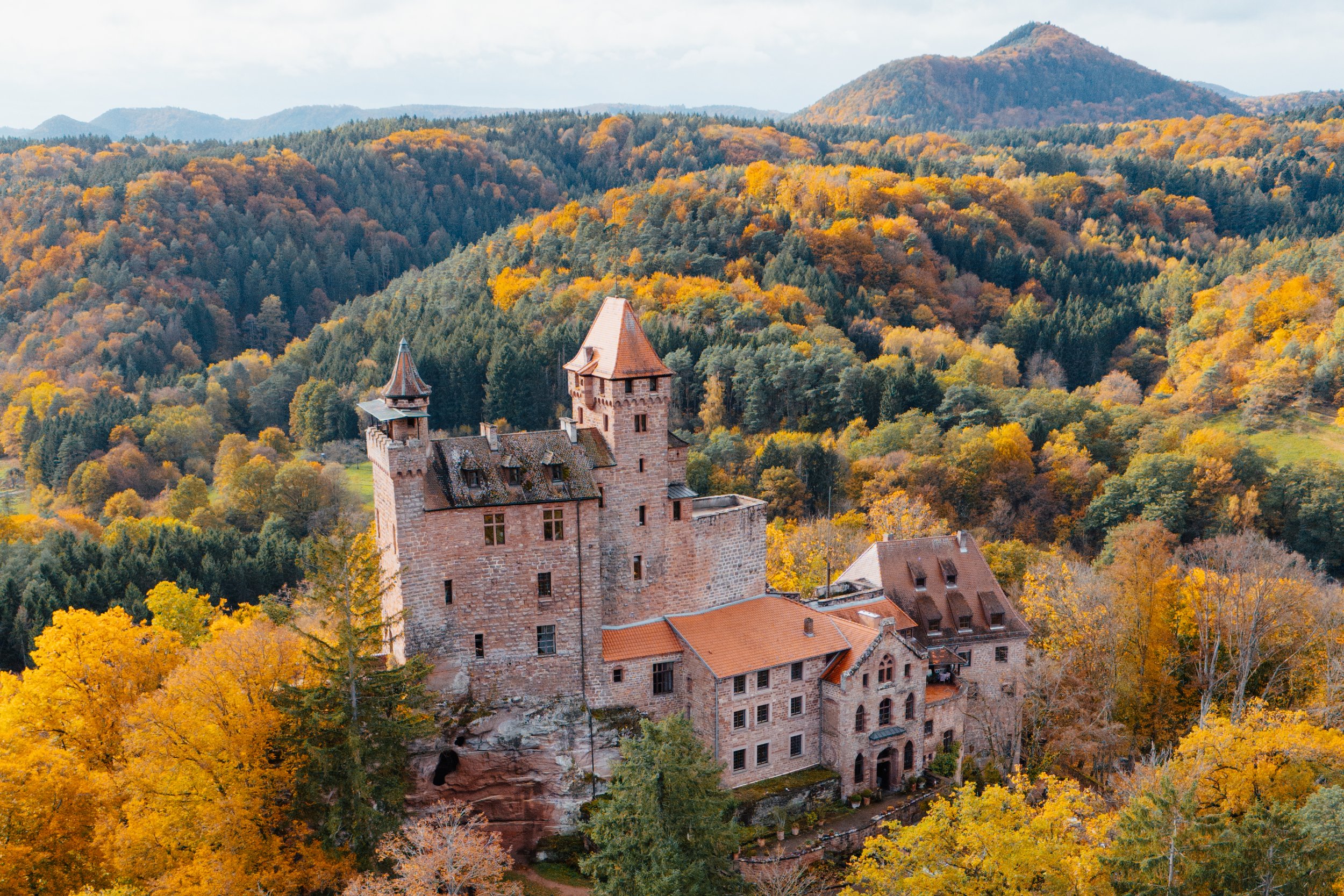
Burg Berwartstein was first mentioned in 1152. Unlike Burg Eltz or Schloss Bürresheim, it was frequently involved in conflicts, which is reflected in its condition. It was destroyed by lightning in 1591 and rebuilt in the 19th century. It is the only inhabited castle in the Palatinate.
The castle can be visited via guided tour. There is also an on-site restaurant, and overnight stays are possible.
Numerous hiking trails surround the castle. Free parking is available below, though we reached it by hiking part of the “Felsenland Sagenweg” trail.
Opening hours:
March–October: daily 9:30 am–5 pm
November–February: Saturdays & Sundays, 9:30 am–5 pm
Admission: €5 adults, €3 children
6. Reichsburg Trifels
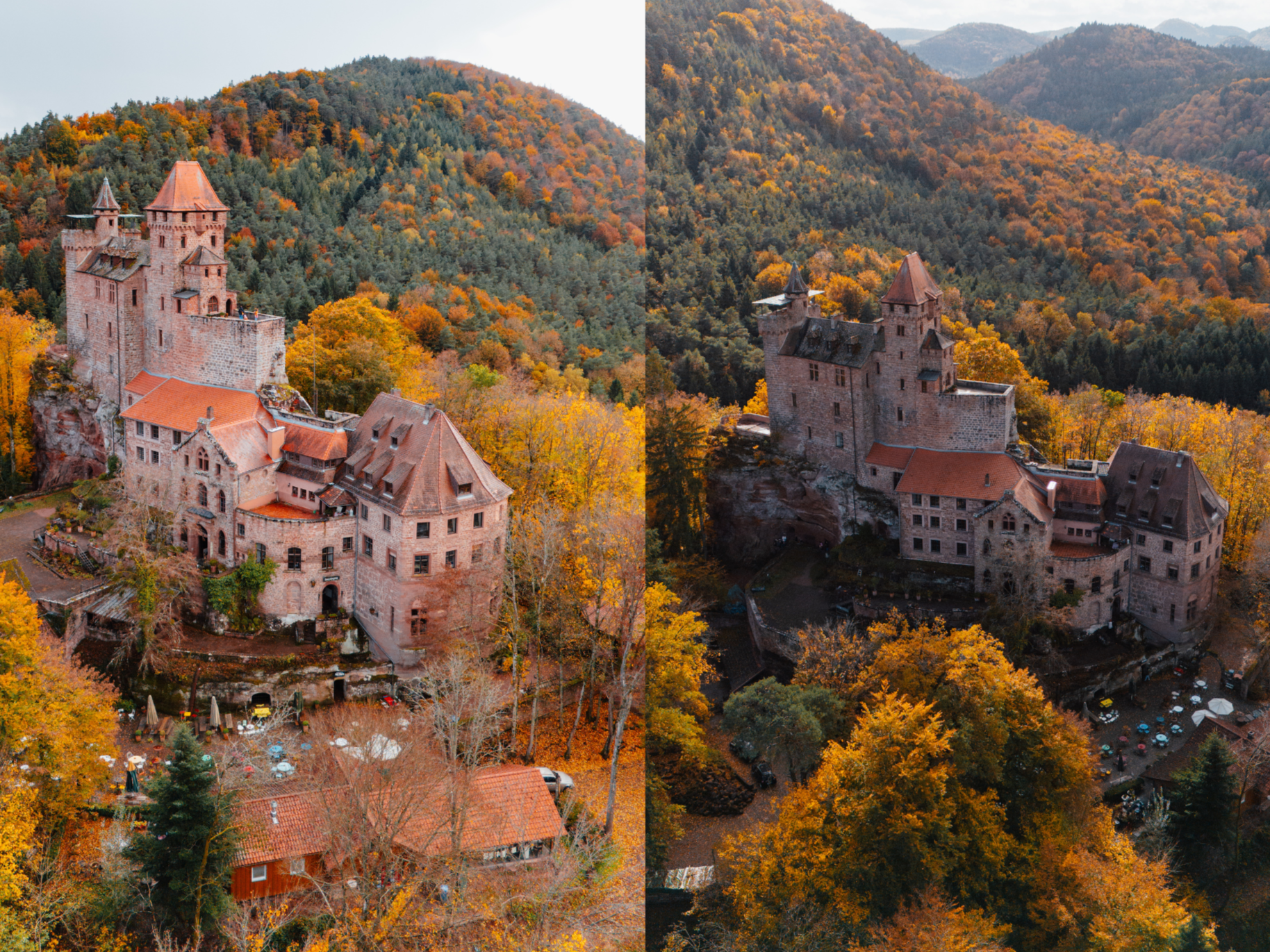
In the Middle Ages, Reichsburg Trifels was one of the most important power centres of the Holy Roman Empire. In the 12th and 13th centuries, it was elevated to an imperial castle and housed the imperial regalia (crown, sceptre, sword and imperial orb). King Richard the Lionheart of England was imprisoned here from 1193 to 1194.
The castle fell into ruin in the 17th century and was rebuilt by 1940 and again in the 1960s, influenced by the political and ideological views of those times.
Paid parking is available below the castle, followed by a 25-minute uphill walk. The car park can also be reached by public transport (bus line 527) from Annweiler.
Several hiking trails lead to the castle, including the Annweiler Castle Trail, the Palatinate Wine Trail and the family-friendly Trifels Adventure Trail.
Opening hours:
15 March – 31 October: Tuesday–Sunday & public holidays, 10 am–6 pm (last entry 5 pm)
November & 1 February – 14 March: Saturdays, Sundays & public holidays, 10 am–5 pm (last entry 4 pm)
Closed December & January
Admission: €6 adults, €5 reduced, €3 children
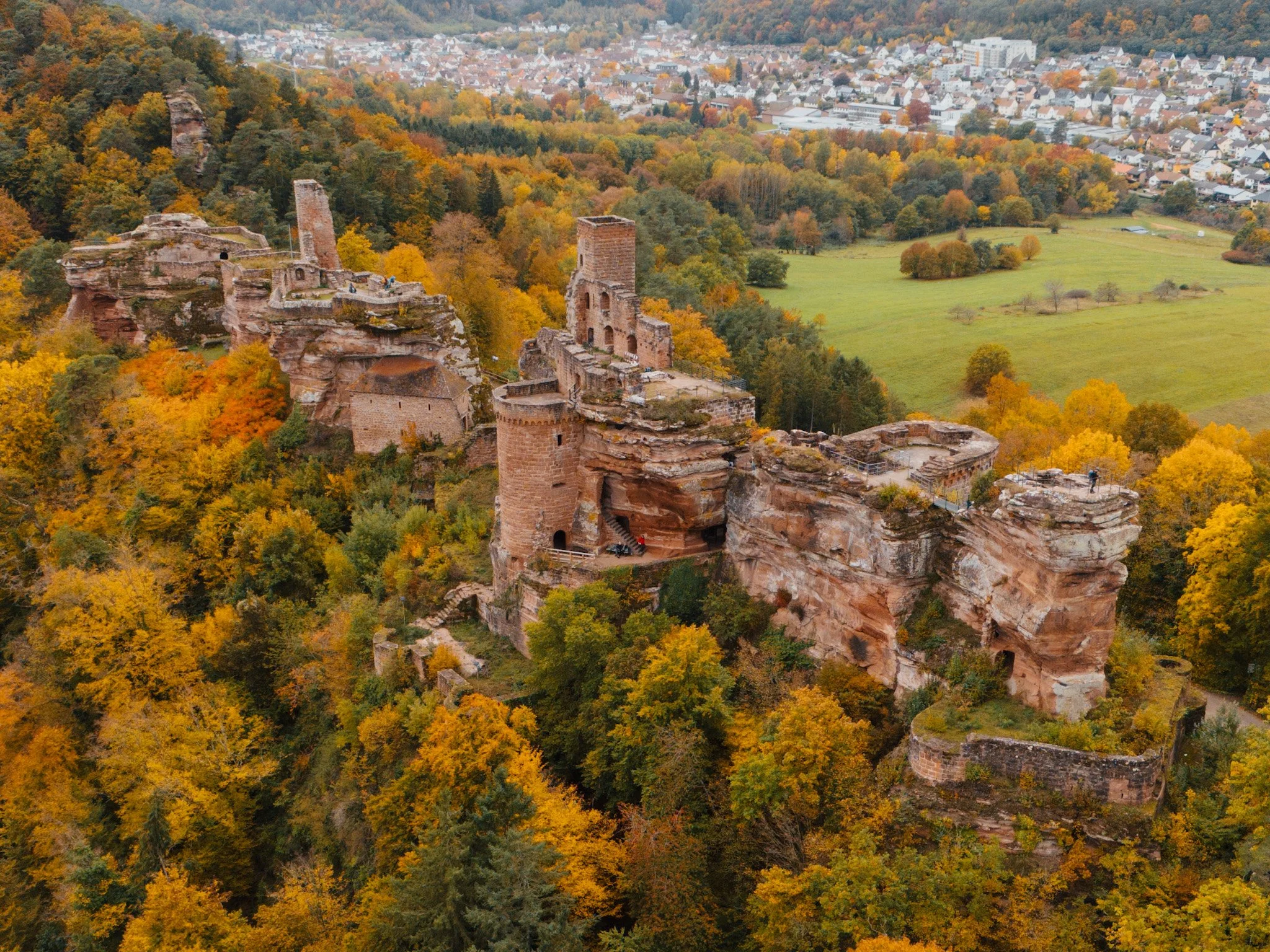
7. Altdahn Castle Complex

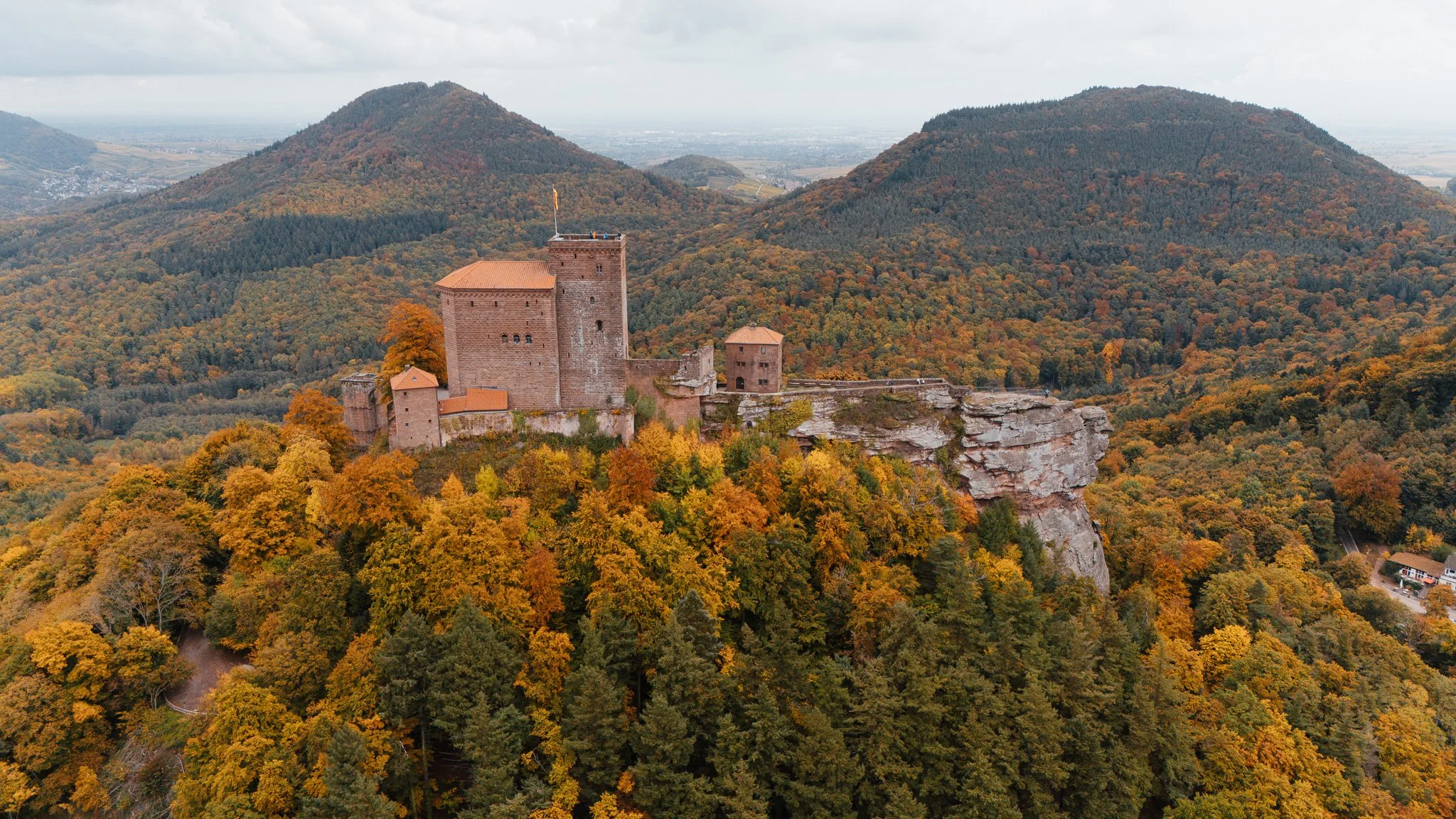
The Altdahn Castle Complex consists of three fortifications built on five red sandstone cliffs. First mentioned in the 12th century, the complex stretches over 200 metres, making it one of the largest medieval fortifications in the Palatinate. It was destroyed during the Thirty Years’ War. Today, only the ruins and a small castle museum remain.
Free parking is available below the castle. It can also be reached via hiking trails such as the Dahn Circular Trail and the Felsenland Sagenweg.
Opening hours:
1 April – 30 September: Thursday–Tuesday, 10 am–6 pm (last entry 5 pm)
1–31 October: Thursday–Tuesday, 10 am–5 pm (last entry 4 pm)
Closed 1 November – 31 March
Admission: free
8. Hardenburg Castle Ruins
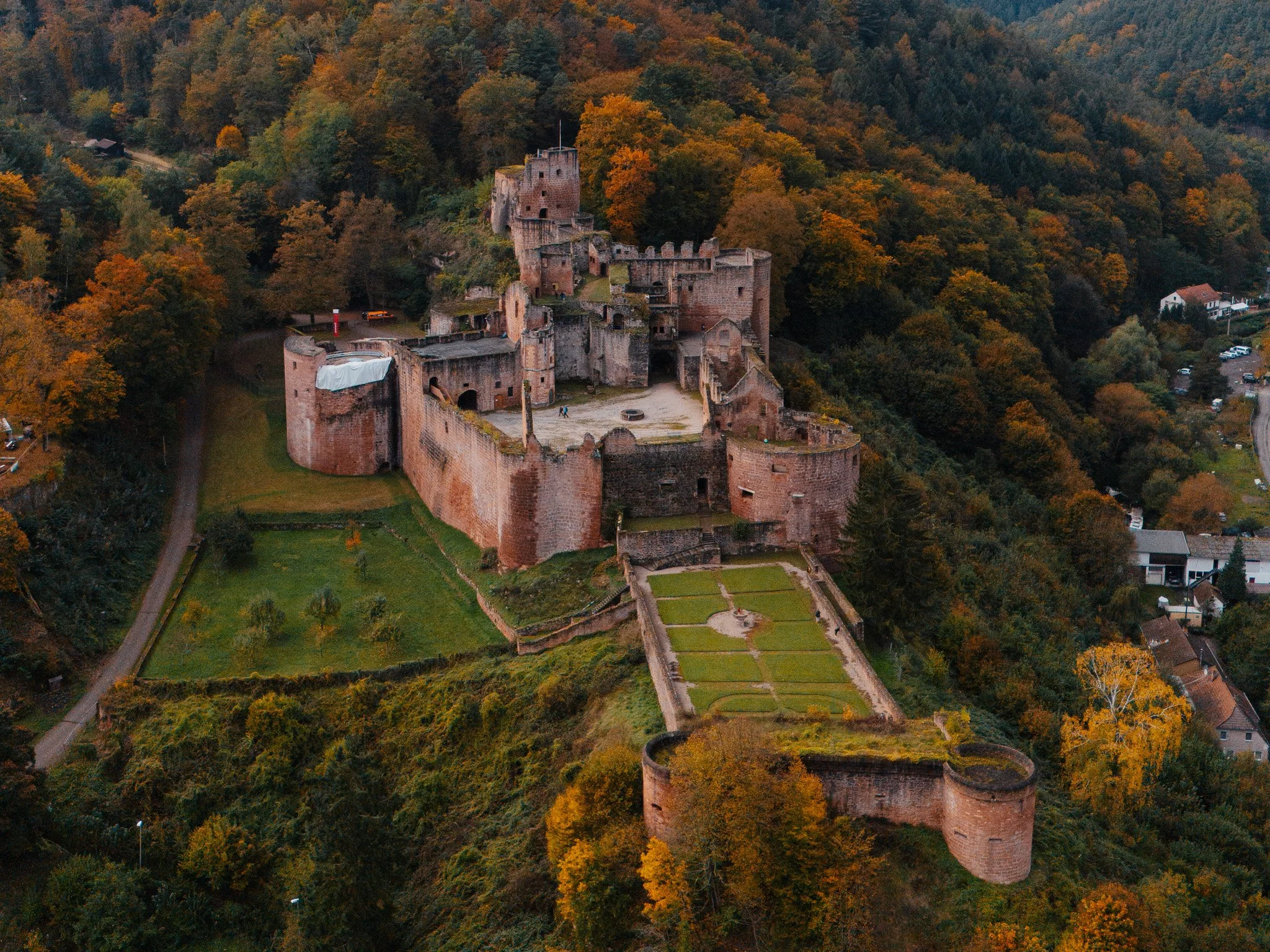
Built from the 13th century onwards, Hardenburg is one of the largest castle ruins in the region. It once featured residential buildings, pleasure gardens and catacombs.
Opening hours:
15 March – 31 October: Thursday–Sunday & public holidays, 10 am–6 pm
November & 1 February – 14 March: Saturdays, Sundays & public holidays, 10 am–5 pm (last entry 4 pm)
Closed December & January
Admission: €6 adults, €5 reduced, €3 children

9. Wegelnburg Castle Ruins
Built in the 12th and 13th centuries, Wegelnburg is the highest castle in the Palatinate. It can only be reached on foot via an uphill hiking trail, which is also part of the Felsenland Sagenweg.
Opening hours: open year-round
Admission: free

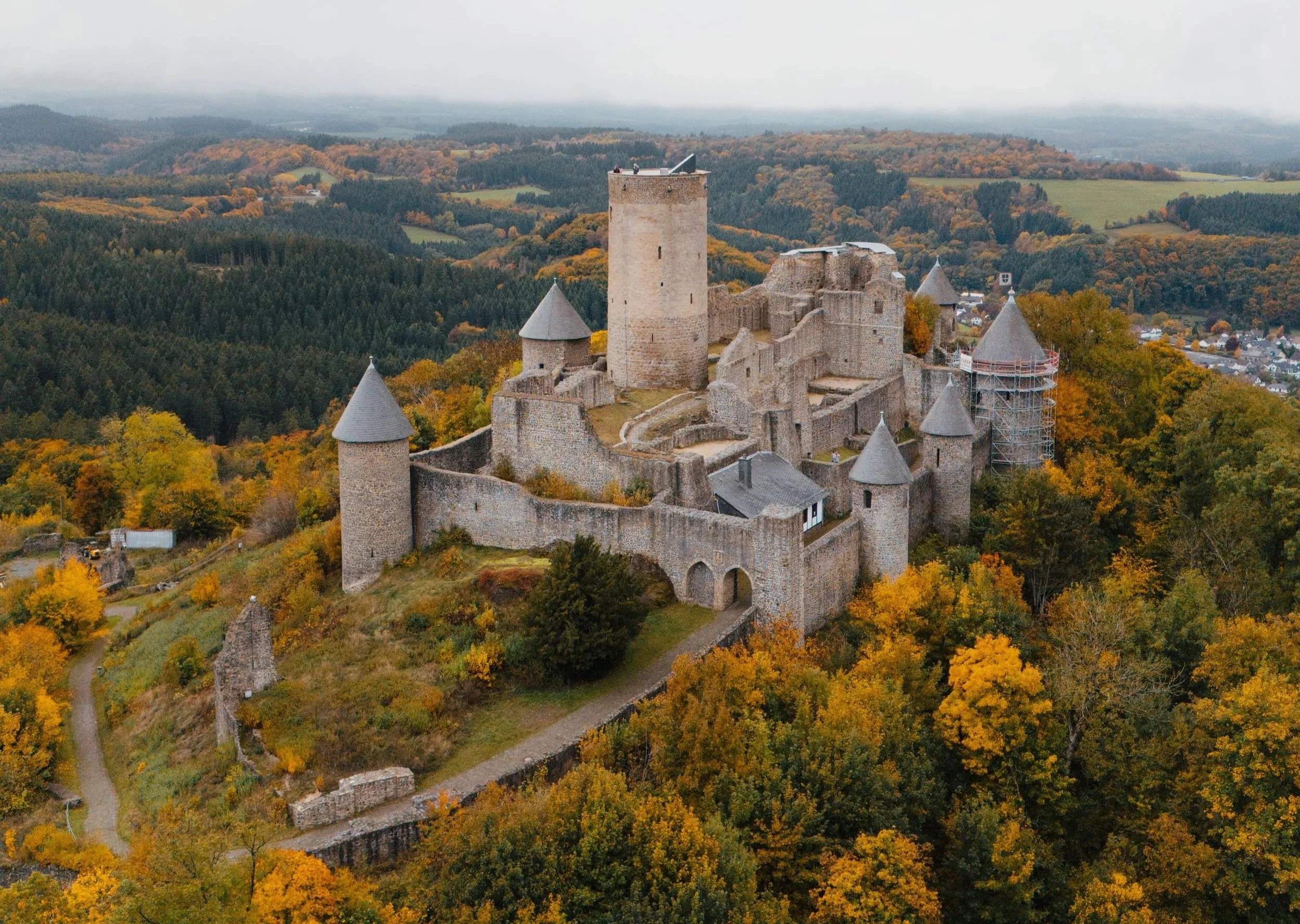
10. Nürburg
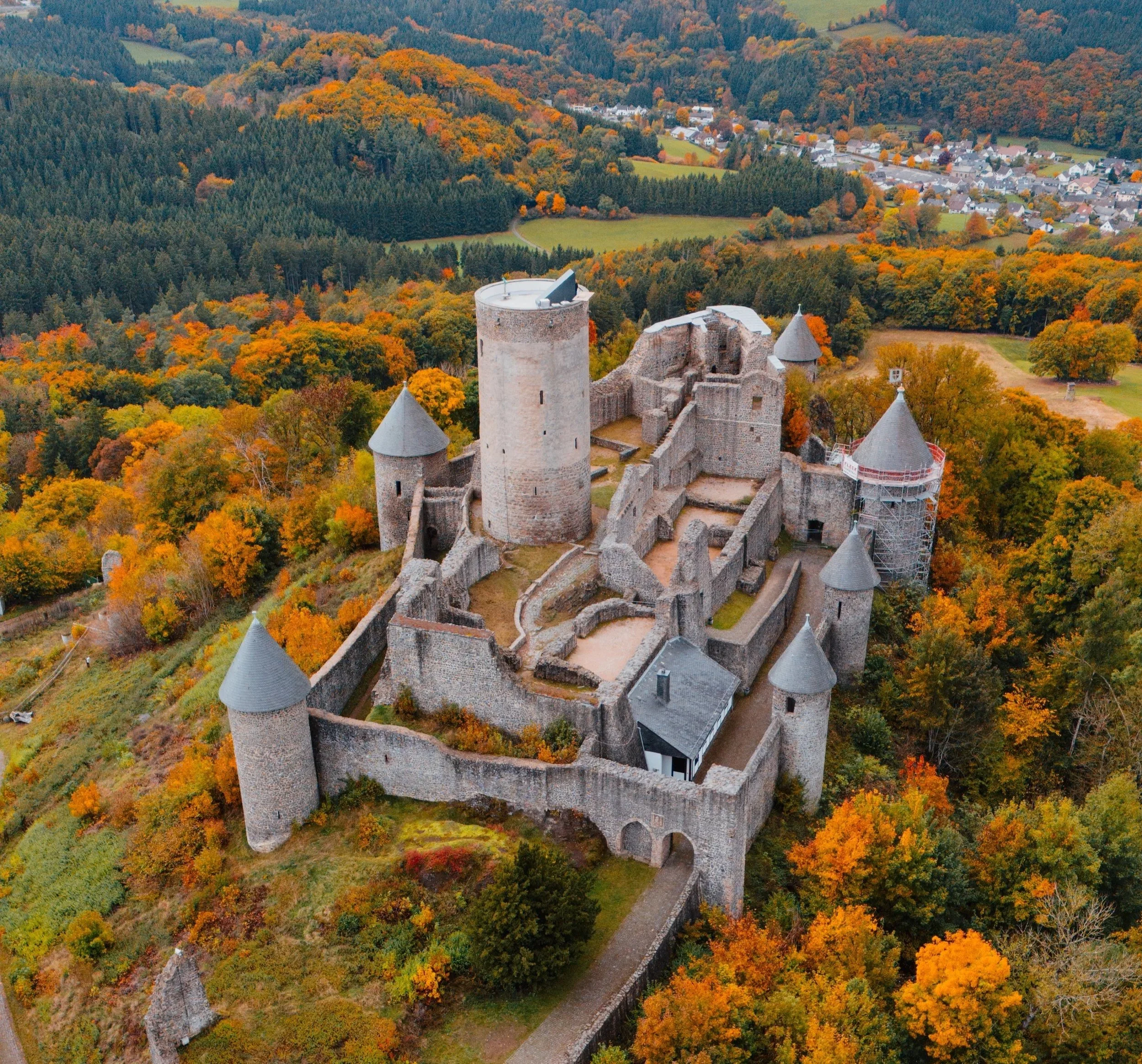
First mentioned in 1166, Nürburg Castle now stands within the Nürburgring. By the 16th century, the castle was already in poor condition and was heavily damaged during the Thirty Years’ War before being completely destroyed in the War of the Palatine Succession. Despite this, impressive ruins remain. From the 20-metre-high keep, you can enjoy panoramic views over the Eifel region.
Opening hours:
November & March: Saturdays & Sundays, 11 am–5 pm
1 April – 31 October: Monday–Friday, 11 am–5 pm; Saturdays & Sundays, 10 am–6 pm
Closed December – February
Admission: €3 adults, €2 reduced, €1.50 children